Sisters Katie and Tash Johnston have created a gallery that aims to bridge the gap between high art and the Cotswold community of Nailsworth. Is art for the people? Is there really a tension between inspiration, aspiration and decoration? Alongside its white walls of contemporary art, the gallery offers a selection of artful homewares and books, and even its admin area is styled to give a sense of chic domestic flair.
The gallerists report that conversations with locals reflected the idea that terms like “art” and “gallery” can intimidate, and that for many neophyte collectors, buying art online through click-and-pay is the more familiar route. What they aim to do is inspire people to enter the conversation around art: to feel their taste validated, and to feel empowered to build a creative life by buying art that enriches it. They hope people will find ways to deepen their connection with nature, ideas, observation or society, or to nurture a narrative around their existence that goes beyond the purely material.
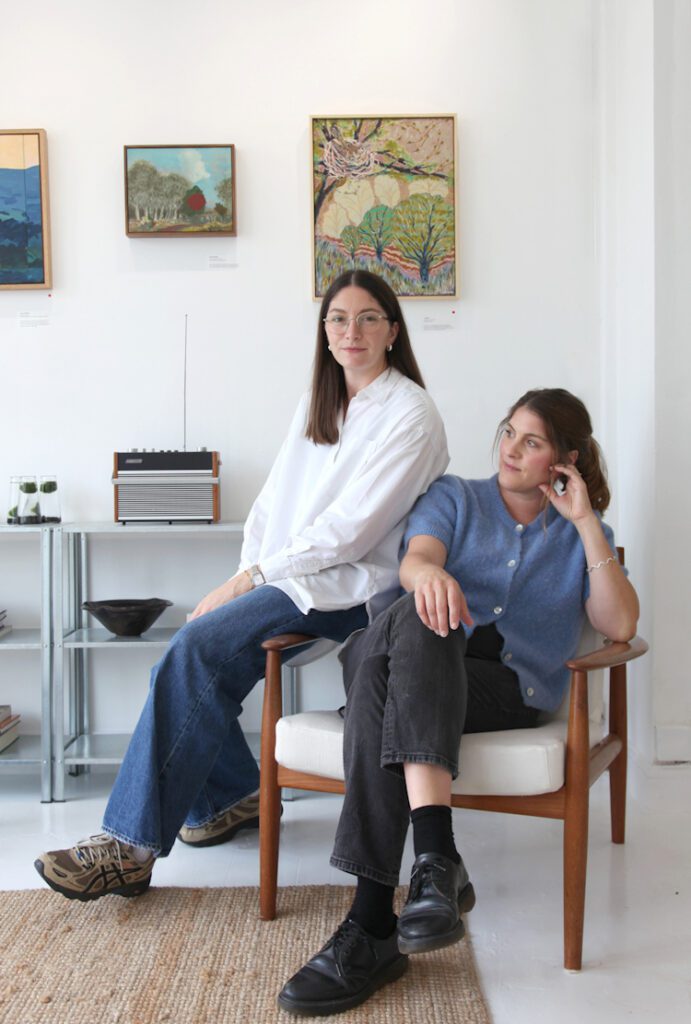
Nailsworth is nestled in a valley, where almost everything is uphill. What the sisters are banking on is that art is the stream that leads out of confinement and towards a wider body of thought. It’s a tough market as a whole, and tougher still for regional galleries, but surely, if this house can be built, value and conversation will flow.
Trebuchet asked Katie what drew them to art and what defines their vision.
Katie/this house: We’ve always been surrounded by art and had parents working in the creative industries. I (Katie) went on to study illustration and visual communication, which really helped form my identity as a creative. Working across many disciplines since then has given us a lot of different perspectives and quite a broad set of interests within art.
How did your gallery start?
The gallery was born out of the residency programme we run here in our Cotswold cottage. We were building such great relationships with artists through the residency and wanted somewhere to showcase the work they were making. The gallery was the natural next step for us.

What is the vision for this gallery?
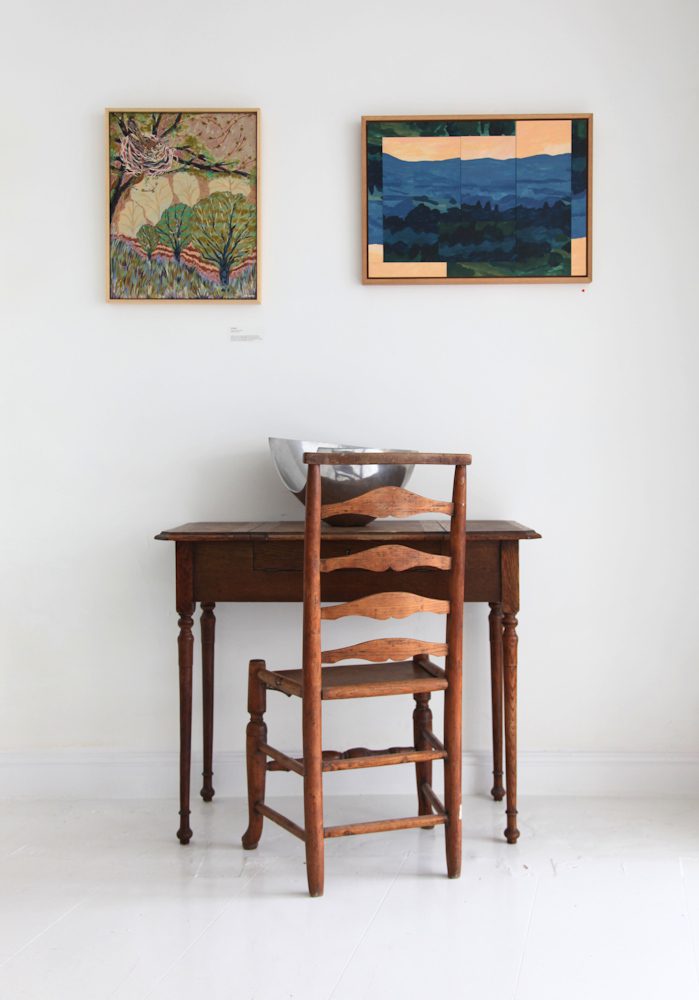
We had a vision of the space being like a living room where art and objects could commune. We wanted the shows to be able to shift with the seasons, with themes set by artists and with our own interests, so we kept it quite blank. We also wanted to incorporate events and host gatherings tied into the themes of each show.
Which artists typify the vision you have for your gallery?
We are really inspired by people working in direct communication with their local landscapes, and have a particular love for those who use a lot of narrative. We’ve worked a lot with James D Wilson, whose journey over the last five years has been amazing to watch. Other artists, like Isabel Carr, offer such a great balance of conceptual depth and pleasing aesthetic.

What do you dislike most about art?
There isn’t much to dislike, but at the higher end the art world is a hugely complex and difficult environment to evaluate. More transparency across the board from artists and galleries would be helpful for everyone. Sometimes the sense that art is there to be seen, spoken about, enjoyed and challenged is lost, and that is always a bit depressing.
How would you define artistic controversy?
We’re not really sure there is much that can be controversial in art these days, barring the illegal or evil. Art has always served the purpose of challenging and questioning. If things are deemed too controversial, surely that negates what art should intrinsically be about.
Do you think that controversy is a positive force in art or a conceptual red herring?
Controversy is often really useful! But if something is controversial for the sake of recognition or publicity, we think it’s less likely to generate meaningful conversation. It’s easy to spot when someone has genuine passion for their subject, especially if the work is innately political or deals with complicated human constructs.
What’s been your biggest challenge?
Setting up in a small town has been hard in terms of getting the right balance with our local community. We hope the exhibitions are taken seriously while also bringing a lot of joy to the local high street. Building a network from scratch and establishing our style and intentions has been a slow and ever-evolving process. A year on, we still feel there is always so much to learn.
What’s been your biggest success?
We’ve had different types of success. Some shows have done really well commercially, which of course feels great as it supports the artists to continue making more work. Other shows have been more successful in terms of the discussions and conversations they sparked. We always try to find a good balance between these things while also sustaining the gallery as a business.
Who are your five favourite artists and why?
Such a difficult question! We are very much guided by what we’re interested in at the time. Having a background in illustration, there’s a narrative thread that runs through a lot of the artists’ work we admire. We love the stories and dedication to character in Toulouse-Lautrec’s lithographs. We have a soft spot for Georgia O’Keeffe, particularly her looser works on paper. We are always inspired by artists who use play in their work to push the boundaries of material; Alexander Calder is a current favourite. Recently we’ve been drawn back to some of the Romantics, like William Blake and Samuel Palmer, as we’ve been meeting lots of new artists working with the British landscape.
Who do you think is the artist to watch at the moment and why?
David Phillips (tenfields) is someone we always think of as working steadfastly within his own niche. The one-off books he makes each year for collectors and friends are a real insight into his conceptual practice.
What’s up next for your gallery?
Exciting plans for pop-ups later in 2028, and some very under-wraps news we can’t share yet for the business as a whole!
Thu – Sat 10am-4pm. Other times by appointment.
This House, Market Street, Nailsworth, Stroud GL6 0BZ, UK
www.thishouse.uk

Images courtesy of this house and the artists © as per image.

The aim of art is to represent not the outward appearance of things, but their inward significance. – Aristotle