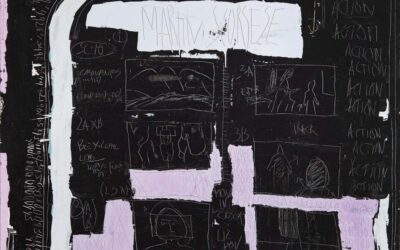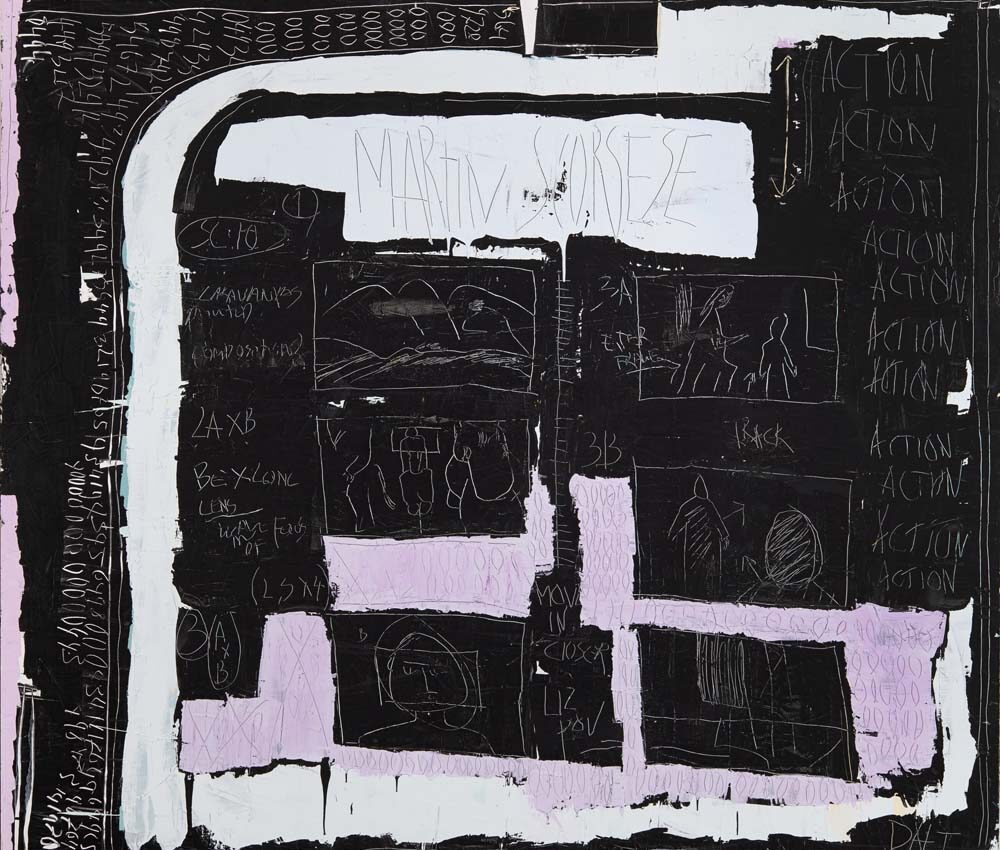
Dutch-Australian, raised in Bali and trained at Parsons School of Design in New York, Dali Schonfelder builds her paintings from the raw material of maths and music: Fibonacci spirals, fragments of equations and musical notation scratched into layered fields of pastel and black. Her canvases treat these systems less as subjects than as vessels for feeling, portals to other relationships with the structures we think we already know.
We featured Schonfelder’s work in our profile Painting by Unknown Numbers and here, we publish our conversation with her in full. What first drew her to art, the beauty she finds in numbers and notation, her deeply layered process, and the synchronicities that arise once a painting leaves the studio.
Dali Schonfelder: There were three distinct things that drew me to art. The first was my fascination with how art made me feel. The way art could lift me up or make me question things and change my perspective. I realised that any memory or experience I had or would have, would always be better with art in it. It created this deep desire for me to fill spaces with art that made people’s lives better.
The second thing that drew me to art was my deep need to make things. Art has saved me time and time again when nothing feels possible and I turn to making things and everything falls into place. I need to make things every day.
And the last thing that drew me to art was a curiosity for learning and then transmuting what I’ve learned about myself and the world into paintings. Almost as a way to reflect back all the experiences I’ve had. I find comfort in being around art.
What do you see in maths, music notation and equations that informs your creative vision?
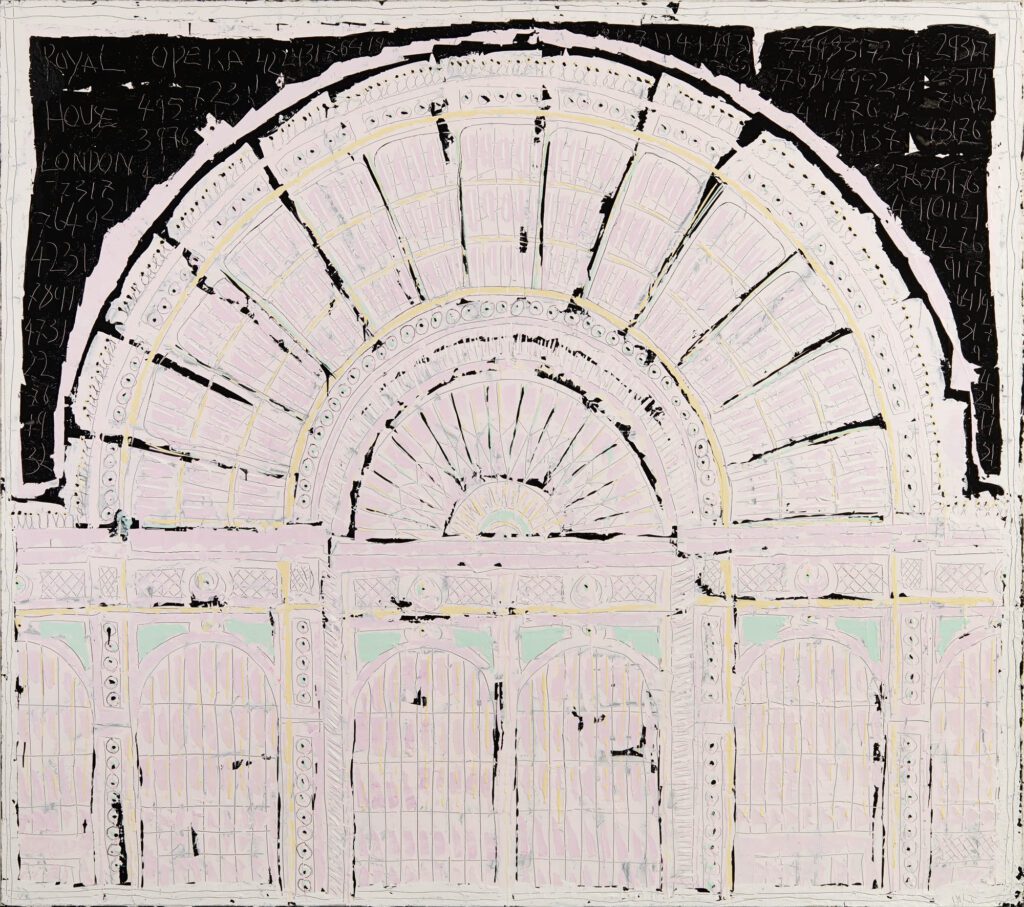
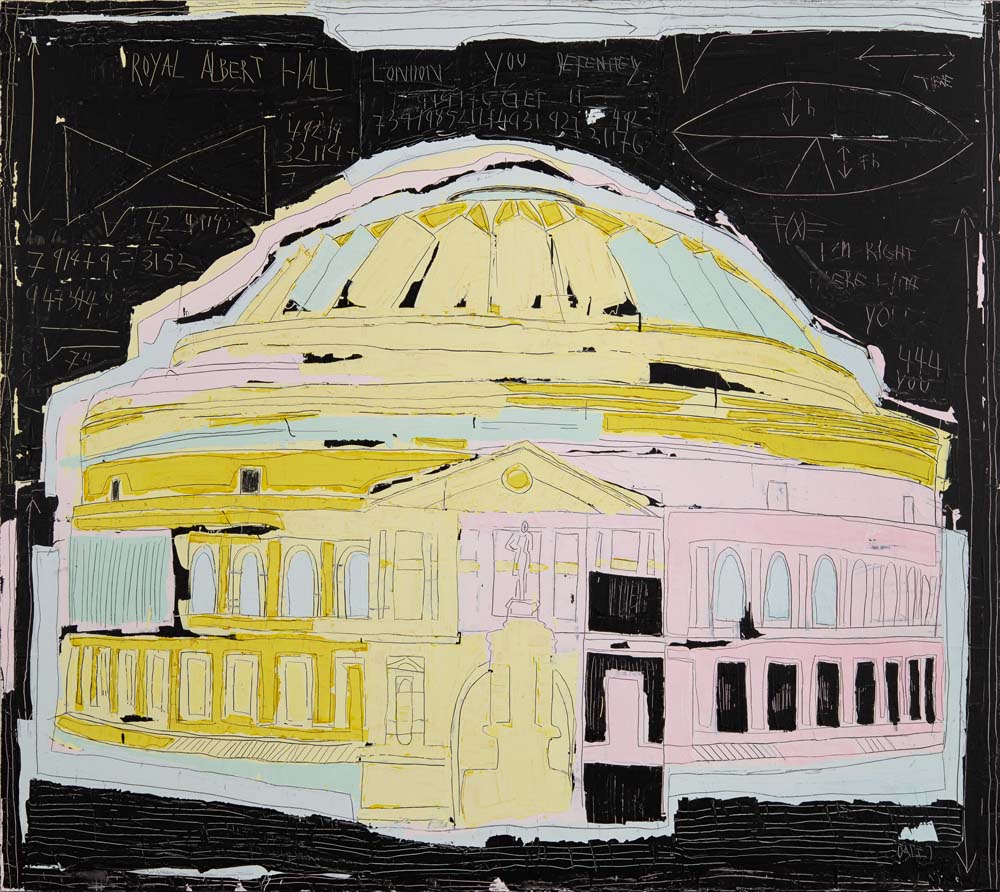
Maths has always fascinated me. Not only do I find numbers and equations incredibly beautiful to look at, but you can use numbers to make sense of the world we live in. In my younger years I wasn’t the best at school but numbers always made sense to me. It’s incredibly beautiful how maths allows everything to fall into place. And at the same time, as much as we can make sense of the world through numbers, there is still so much to discover and life is still such a mystery to be lived. My recent work has lots of numbers and equations that actually don’t make sense. It was my way of connecting with numbers and maths and also being ok with them not making sense or needing to be figured out. But my next series will go back into maths. Specifically physics and space and time.
Music has been an anchor for my deep inner life. The way certain symphonies and songs touch on moments, and are able to translate how I feel, is something nothing else quite compares to. It’s a whole different language that I won’t try to translate in words. Painting these notations in a free and raw way allows me to connect in a different way. I always listen to the music of the notations I am painting. And the whole experience itself is such a rich moment.
Your favourite equations, and why?
I have yet to settle on my favourite equation. I am still exploring and might never come to a favourite! I am however, though it is not an equation, fascinated by the Fibonacci sequence and the golden ratio. Fibonacci is found from the symmetry in nature to most intricate patterns in the works of some of the greatest artists.
The golden ratio reveals the harmony in our world. It is also the natural order of things in our lives. We are always building on the moments before even if things don’t always feel like they are expanding. I did a painting called Fibonacci in Day and Night which draws on this topic of expansion. Some blocks are covered and dark but the natural order of the sequence continues to grow.
Your favourite score, and why?
My favourite score is Gustav Mahler’s Symphony No. 2, Resurrection. I genuinely believe it is one of, if not the greatest symphony created to date. Everyone has their own relationship with this symphony, but no one is the same after hearing it for the first time. It awakened parts in me that, again, only music can touch.
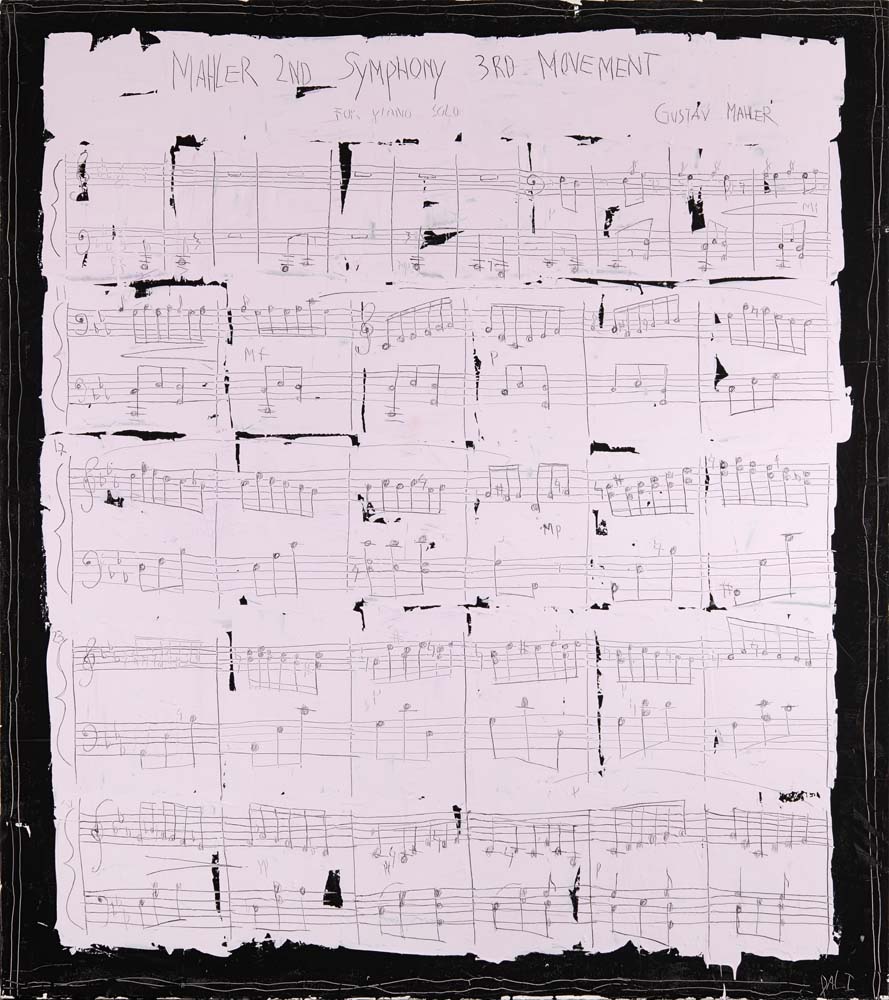
This symphony has been a companion during the years of questioning what the meaning of life is. I am still yearning for the answer, but through this symphony, parts of my consciousness feels like it understands.
You have a particular colour palette. Can you talk us through those choices?
I use lots of light pastels in contrast with black. I think contrast allows for appreciation. In the physical sense of the painting, as the light colours are more prominent due to the black and vice versa.
But I also appreciate contrast in life. When I go through darker moments I appreciate the light so much more. And it becomes a little dance where I appreciate both states. My art is a reflection of that.
Layering seems central to your practice. Can you describe your process technically, and how you approach the creation of meaning in the work?
My work has at least 7 and sometimes up to 15 layers per painting. The more layers the more texture appears. The work feels more lived in and felt when there are more layers. I start with 2-4 layers of white until I like the texture of the surface of the canvas. Then I go in with 2-4 layers of black before I even start any score, numbers, or design. Then I mix the colours of the paint and apply them to the black canvas and scratch the life into the painting. I continue adding layers until I feel fully satisfied. Sometimes a piece takes ages to be done because I could continue adding layers and layers.
As for the meaning in the work, just like the paintings, there are many layers to this. My meaning is found in the way of life, that creating paintings allows me to have. The space and time to think about how reality is structured, listen to music, live in cities that inspire me, and to create work that reflects that. It’s such a joy.
I could go into specific paintings that hold specific meaning but I also like leaving that up to the viewer. I wouldn’t want to take away someone’s experience of a piece of art. Once it’s out in the world it’s completely separate from me. And different people will equate different meaning to certain scores, maths, or quintessential architecture depending on their own relationship with those topics. I find that a peaceful thought. I’ve had it countless times again, where I have an urge to listen to something new and create a painting from it, and then someone happens to stumble upon it and it was the song they played repeatedly in their childhood. Or I’ve painted maps and written “all roads lead to home” on a street. And someone who sees it happens to live on the exact location the engraving stated those words. There is something so mysterious about this synchronicity.
So I try to give meaning to my work in the way that I experience and live my life, but also allow the meaning to be connected to something greater that I have yet to make sense of.
Dali Schonfelder is represented by the Rebecca Hossack Art Gallery, London.
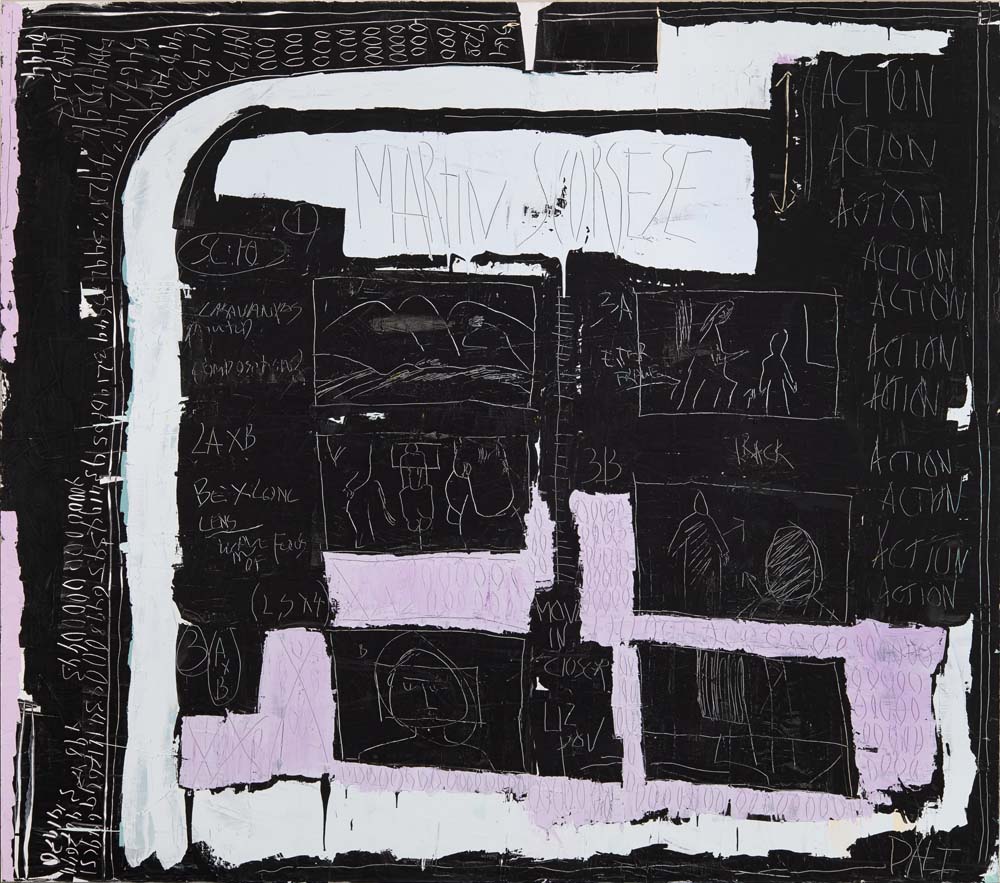
Images courtesy of the artist © Dali Schonfelder. This article is part of a funded series (in this case Schonfelder gave us an artwork) by emerging artists including Dali Schonfelder.

The aim of art is to represent not the outward appearance of things, but their inward significance. – Aristotle