What’s next? The same question faces the artist after every art education, the chasm of possibility with no bridge of opportunity, worse still the diploma that opens no doors. Germany’s academies are among the best in the world, yet the walk from the degree show to the art market remains largely uncharted, unmapped, and generally opaque. A gap that Dr Cornelia Stalker set out to close when she founded Nuremberg’s Galerie VON&VON’s Playground Art Prize in 2016. A scrappy showcase for artists still in education and hardened, by 2019, into a proper prize with a jury drawn from the directors’ offices of major museums.
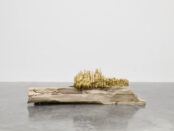
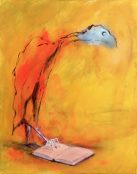
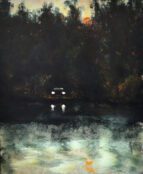
Ten years on, there’s a lot to commend (see Trebuchet: The Kidstuff Complex: Nuremberg’s Playground Art Prize, https://www.trebuchet-magazine.com/the-kidstuff-complex-nurembergs-playground-art-prize/). From 200 or so applications the jury selected three winners, Sophie Constanze Polheim, Lin Htet Aung and Jiacheng Li, for a group show at the gallery. One of which will be carried aloft to the ‘curators’ contemporary fair Artissima in Turin. The cash awards are modest and the real currency is the room, the wall, and the potent introductions. As the gallery is fond of noting, the point is less to crown a laureate than to hand a young artist their first working relationship with the people who actually run the institutions.
Trebuchet sat down with Helga Krutzler, curator at Galerie VON&VON and co-organiser of this year’s prize, and Eva Karl, personal assistant to founder Dr Cornelia Stalker and a member of the gallery’s founding team, to talk about early-career talent, the closed circle of the art world, and why the jury changes every single year.
Hello, could you introduce yourself, your role, and where we are?
Helga Krutzler: I’m Helga Krutzler. I’m a curator at Galerie VON&VON and I was co-organiser of the Playground Art Prize this year.
Can you tell us about the history of the prize?
Helga Krutzler: This is the tenth year of the Prize, but it was a process. It started in 2016 as an exhibition with multiple young artists who were still in education. Two years of exhibitions followed and the team saw that there was more behind it. So in 2019, it became the art prize as we know it today, with a jury made up of museum curators and directors. Every year we usually select three winners and stage a group show. We also invite other artists who applied to the prize to join the discussion.
It sounds like there was an emerging art focus. However, to their credit, looking at the artists’ work you have here, they seem quite developed, emerged. Can you tell us a bit about that focus, and whether that’s continued?
Helga Krutzler: I think that’s largely down to the jury. We have incredible people from major museums who have the experience and the eye to recognise talent at a very early stage. We also have an excellent art academy here in Nuremberg and more generally Germany has a long tradition of outstanding art schools. From the beginning, it was important for us to identify young artists with real potential, and with the expertise of the jury it’s much easier to spot that talent early on.
Nevertheless, one of the application requirements is that artists must have studied for at least three years. By that stage, they’ve usually moved beyond their initial experiments. Most of them already have a strong artistic voice.
This year was particularly special. That was the main feedback from the jury: all three finalists already have remarkably distinctive voices, more developed than those of many artists with ten years of professional experience. You can really see the depth of research behind their work, the thought they put into every aspect of their practice, and the unique perspective that comes through in each piece. I think that’s what makes them so exceptional.
Eva Karl: I was part of the gallery’s founding team when we started the Playground Art Prize a decade ago. The bigger picture for the Prize is that it’s really hard for young artists to find an entry into the art market. Dr Cornelia Stalker, the founder, saw that gap so she created a platform to help artists find that entryway. That is what the Playground Art Prize is: an opportunity for art students to have their very first exhibition outside the university system and to enter the art market.

I guess over the course of the prize, over many years, you’ve seen winners go on to other things and successes and develop. Could you tell us some of those stories that you feel quite close to?
Helga Krutzler: I think that’s the most beautiful thing about it, because so many of them went on to do big things. From our side, at Galerie VON&VON, we also work with finalists on art fairs. For example at Artissima, Italy’s only art fair dedicated exclusively to contemporary art, we always invite one of the previous years’ winners to exhibit with us. This is a big opportunity, their first ever art fair experience, so it’s always a big moment in their career. Many of our winners over the years have gone on to exhibit in museums and also enter collections.
Sometimes we can talk about the character of a certain prize. Sometimes the opposite is true: some prizes try very hard to make sure that year on year it’s completely different. Where does it sit with you?
Helga Krutzler: That’s a really interesting question, and it’s actually something we discussed while we were putting together the shortlist, especially because we received more applications than ever before this year. Over 200, which is incredible.
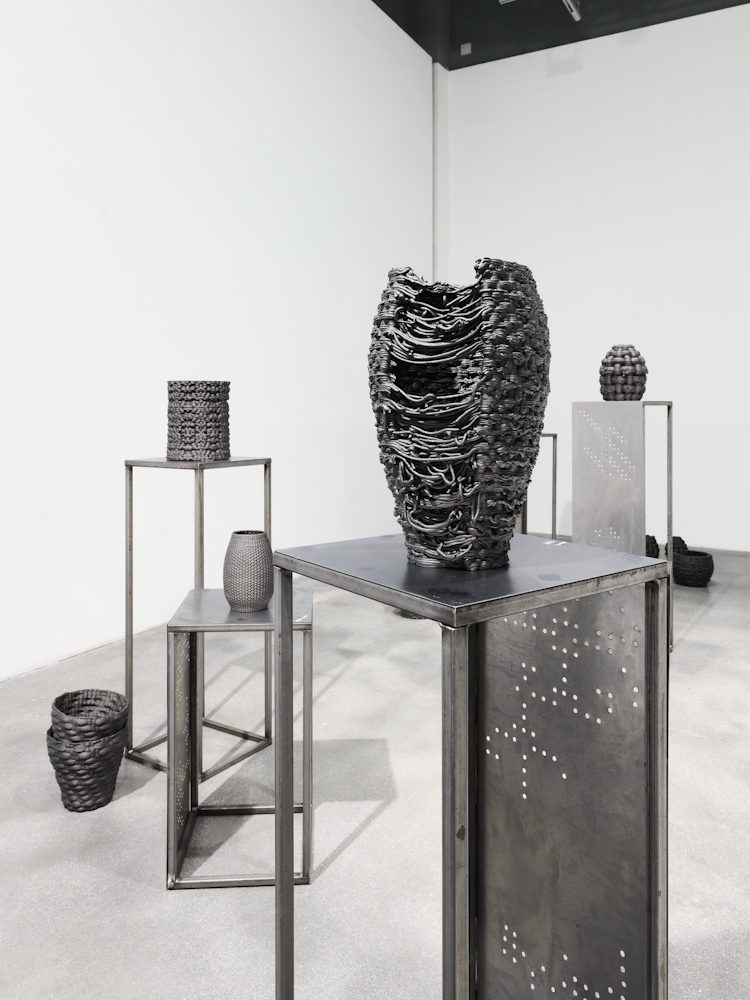
What really stood out was the diversity of the submissions. Over the years, we’ve had winners and nominees working across every imaginable medium, from performance and painting to sculpture and everything in between. So I wouldn’t say there’s one particular technique or discipline that stands out. Many art prizes tend to favour painting or sculpture, but I don’t think that’s the case here.
What connects the winners is the strength of their artistic voice. Looking back over the previous editions, I think every winner has had a very distinctive perspective and a clear sense of who they are as an artist, and that’s ultimately what makes the difference.
Eva Karl: They share certain personality traits: strong, distinct, with a mature character, despite their young age. It’s really about whether they have found themselves in their work and whether they can express that through their practice.
Helga Krutzler: In the best-case scenario, it becomes a long-term relationship. Our hope as a gallery is to work with our artists for as long as possible, because that’s when you really get to see their practice evolve. With artists at such an early stage in their careers, there’s so much potential to grow together, and ideally to continue working with them for decades. It’s exciting to think about where this year’s winners might be in ten, twenty or even thirty years’ time.
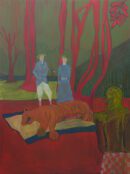
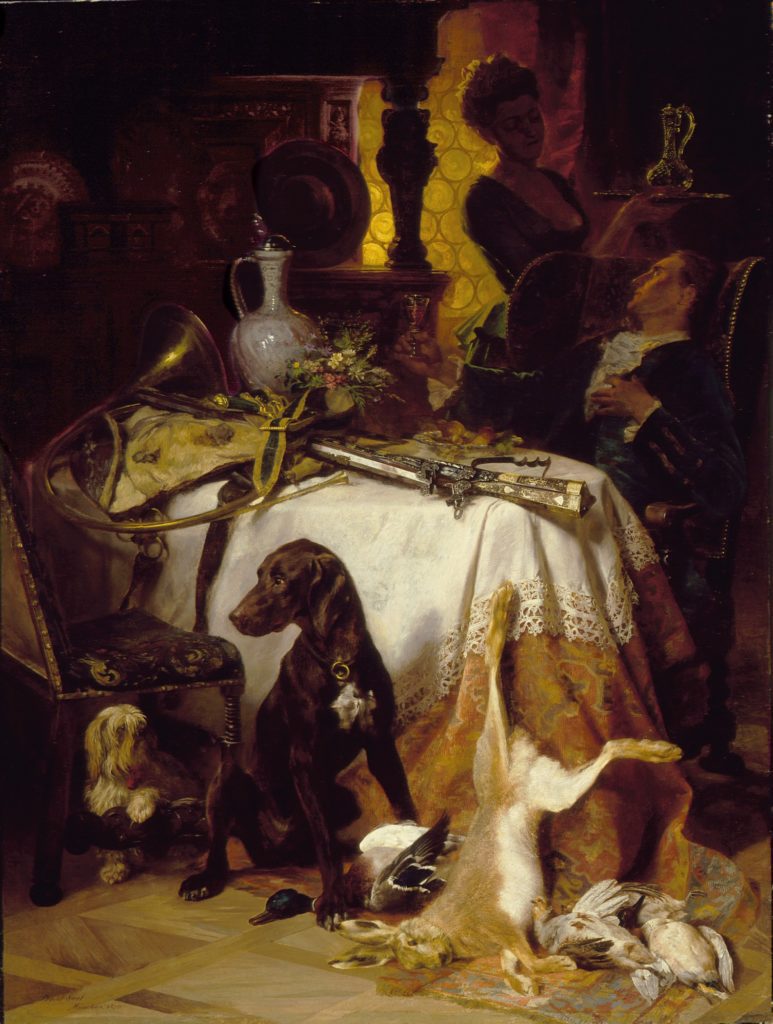
For example, one of this year’s winners, Jiacheng Li from Singapore, exhibited the very first paintings he has ever made. His background is actually in sculpture, so it’s fascinating to witness this point in his artistic journey. I’m really curious to see where he’ll be in five or ten years’ time, how his practice develops, and whether he continues with painting or moves in an entirely different direction.
More generally, we’re always open to new opportunities, whether that’s collaborating on exhibitions, participating in art fairs, or exploring other projects together as they arise.

In terms of that development how do you see the gallery’s involvement in the artist’s future?
Helga Krutzler: With these works, because they are so strong, our hope is, of course, to place them with institutions and collectors who genuinely appreciate this kind of research-based practice. All three winners this year could be described in that way. We would love to help place their work in important collections and institutions, not only because it’s the right context for the work, but also because it can play an important role in their careers and support their development as artists.
Eva Karl: The Prize is not only here to showcase the works. It’s here to help the artists, sell works, get them started, and build relationships with collectors.
Helga Krutzler: Yes, and there’s also a real connection with the jury. That’s one of the reasons it’s so important for us to invite a new jury every year. They come from such outstanding institutions, so the artists have the opportunity to build relationships with them and get to know them personally. Our hope is that these first introductions can eventually lead to opportunities to exhibit in museums.
This year, there was already a great deal of interest, which is incredibly encouraging, and we’re really rooting for the artists. That’s the idea behind bringing together a jury of museum professionals: to create those first connections. For young artists, especially while they’re still at university, it can be very difficult to build that kind of network. The art world can be quite a closed circle, and helping to open those doors is something we, as a gallery, can contribute to. It’s also been Cornelia’s vision for the prize from the very beginning.
Considering the context of the prize in Nuremberg: what’s the art scene like?
Eva Karl: It’s really fun! Art Week Nuremberg also began a decade ago, the same year that we started the Prize. There are around thirty galleries here, so it’s a vibrant scene, although Galerie VON&VON is unique in the city in its international outlook.
Helga Krutzler: One of the wonderful things about the city is its vibrant art scene. It is home to an incredible range of outstanding museums, including a number of excellent contemporary art institutions. As a gallery, we’re fortunate to have built strong relationships with many of them, and we’re delighted that several curators will be joining us this evening. We hope this will also create opportunities for the winners to make institutional connections.
Eva Karl: The vision behind the Prize is to build a platform outside the established art centres like Munich. When you see the incredible jury we have assembled, including directors and curators from some very famous institutions, it’s a real vote of confidence that they want to support and participate in the Prize.
How do the ambitions of the prize align with the ambitions of the gallery?
Helga Krutzler: I would say it’s a love child, or really a passion project and that’s what I admire about my work. This idea really came from something Cornelia saw as a problem, which we see as well every single day: we have these amazing universities and places where artists have the chance to learn, but this step to the art market is quite hard and not really taught.
We give guided tours and seminars at the gallery for students from the Academy of Fine Arts here in Nuremberg, which is important to us, to offer them a space to ask questions, learn more about how a gallery works, and how to stage exhibitions.
It’s something that seems so easy when you’re working in the industry and have done so many shows, but for young artists, it’s something of a continuous mystery. How to transport your works, how to organise your works, how to write about your work, they’re all subjects we talked about previously. What kind of text would you like to read about your own work? How would you like to present yourself as an artist? Those are all important decisions at the beginning of a career, and Cornelia saw this opportunity to create something that was missing.
Eva Karl: It describes the DNA of the gallery: fostering new talent and supporting its progress. And we also expect that as the artists become more successful, and with the jury being different every year, the Prize will continue to grow.
Thank you very much.

There must be a candid place for art to talk about the machinery behind the glitz, and Krutzler and Karl are straightforward about how many roses make a romance. The Playground Art Prize does not pretend that talent alone will find its way; it acknowledges the cliquey closed circles the art world is. Importantly, with a grasp on the reality, they go to pains to hold the door open. A new jury each year, a fair slot in Turin, a seminar on the unglamorous business of how to move a canvas across a border. It is matchmaking dressed as a competition, and refreshingly unembarrassed about it. Ten years in, with more than 200 hopefuls at the gate and three genuinely distinctive winners on the wall, the wager looks sound. Where the doors open, careers follow, ensuring that the artist is closely behind the success of art itself.
Playground Art Prize 2026, on view 2 July – 28 August 2026, Galerie VON&VON, Königstraße 5, 90402 Nürnberg.
www.galerie-vonundvon.de

Image courtesy of Galerie Von & Von. All photos: © Christine Blei
The aim of art is to represent not the outward appearance of things, but their inward significance. – Aristotle