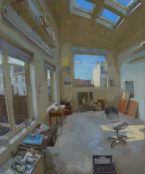
Photographer Haolin Lei, born in Guangdong, China but now Liverpool-based and working under the name Jonathan Lei, explores memory and identity through his artfully constructed images. In a world awash with largely disposable imagery, Lei’s works examine the complexities of contemporary existence through a largely contemplative photographic lens. His carefully curated, and deeply personal, photographs evoke a stillness and invite the viewer into a contemplative space.
In a recent essay entitled The Death of Stillness (Dill 2024), Lucas Dill has argued that the promise, and optimism, of digital space to democratise photography and offer artists community, access and even clients has collapsed as the rise of monetisable video content has eaten away at the possibilities and left photography in the margins, struggling to capture the essence of time and memory through the sheer pace of digital life. Lei counters these sobering realities by creating images that draw the viewer in and invite them to pause and reflect, engaging with their own memories. The images are simple, and have a certain haunted look at times, the feel of other times and spaces crafted through light and filter.
This simple but engrossing idea is exemplified in the ongoing series The Paradox of Forgetting (2025). The work delves into the significance of the Chinese Zhongyuan Festival, or Hungry Ghost Festival. Zhongyuan is a traditional Buddhist and Taoist festival observed to honour the spirits of the deceased. The festival celebrates a time when the spirits of ancestors can return to the living world. During this time, families prepare offerings of food and drink for their ancestors, and conduct various rituals to appease wandering spirits, especially those who may be restless due to lack of proper tributes.

The images are the product of Lei’s return to his family’s ancestral home. The photographs capture the intimate moments shared between Lei and his mother as they honour their ancestors, and showcase, not only the rituals that connect generations, but also the emotional weight of memory. Most of the images are close-ups of artefacts and relics of past existences: an enamel cup with wild flowers, held in his mother’s hands, incense and written prayers laid on the ground, his mother standing in a darkened entryway. All serve as metaphors for the fragile durability of both life and of memory, and the paradox of forgetting. They are images of small, everyday parts of a shared life, their value found only in the meaning they offer to his family. Of this series Lei remarked, “This trip was an act against forgetting, a return to the affection and warmth of generations of our family.”
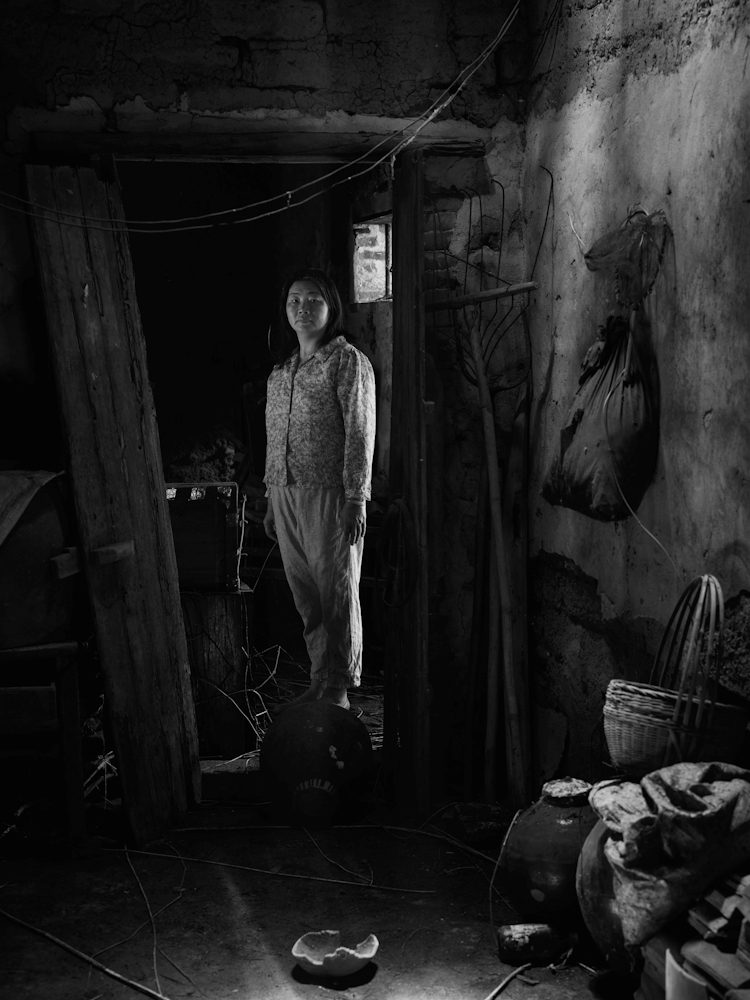
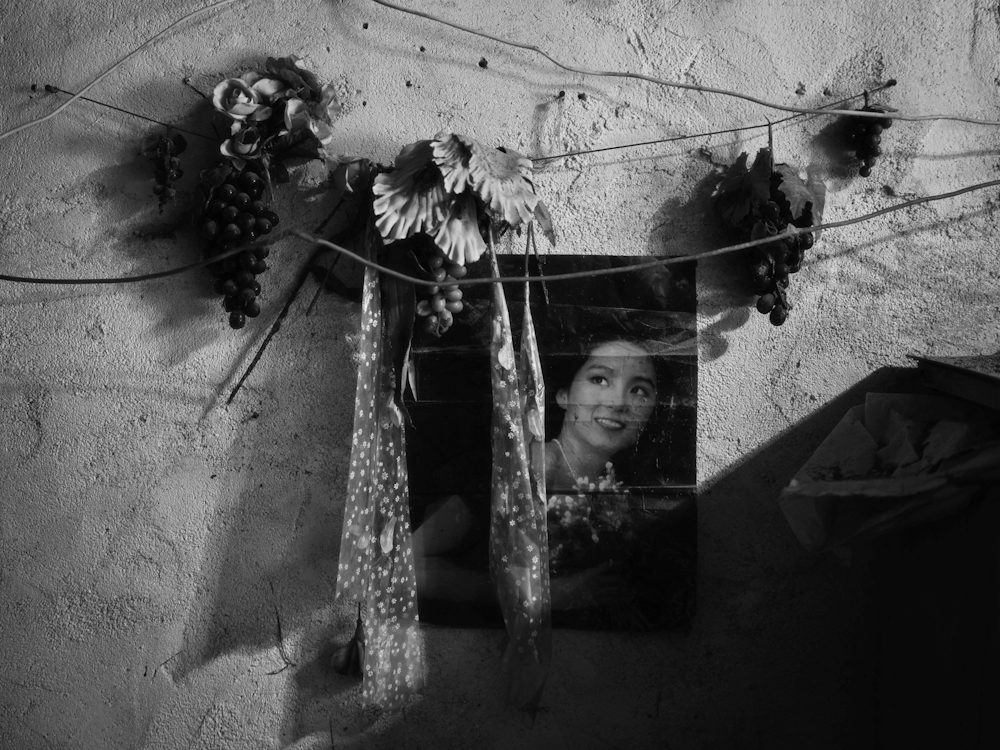
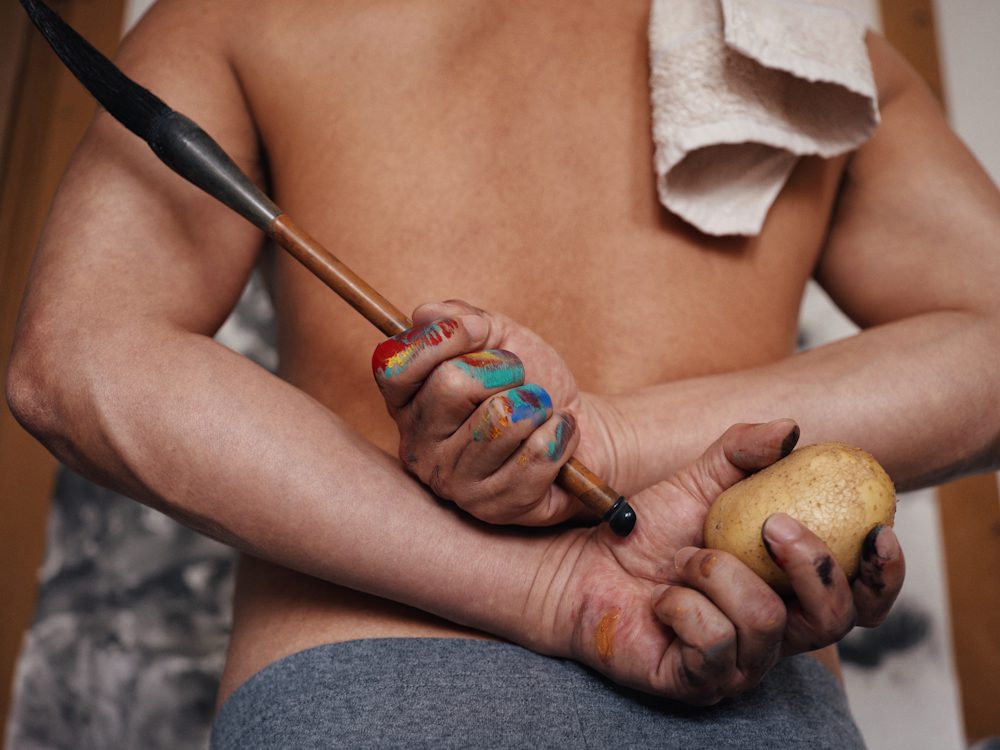
The performance of acts which connect us to our roots, and our identity, is expanded into works that explore social structures which both enhance and inhibit our experiences in life. In another ongoing series, The Stance of Ideals (2026, ongoing), Lei examines how individual aspirations are shaped by societal expectations. Drawing from his father’s experience under the planned economy of China’s Communist system, Lei reflects on how social and institutional pressures can stifle a person’s personal ambition and desire. As Sigmund Freud noted in his book Civilisation and Its Discontents (Freud 1930), there is an unavoidable conflict between one’s personal desires and the demands of the collective. Lei’s father, a man with artistic aspirations, was asssigned work under China’s planned economy, work that left little opportunity for him to pursue his own dreams. Lei’s quiet and tender photos of his father reflect the challenge of a life forced in directions not of its own choosing, and yet holding on to the life not allowed. Rather than focusing on overt oppression, Lei captures the subtlety of a life of conformity and adaptation, what is lost, but also what is held onto. “He was not unwilling to speak. He was first not permitted to speak,” is how the artist characterises his father’s attitude towards his condition: the gradual erosion of voice and choice when faced with diminished individual agency. And yet, in these quiet images, there is a tender resolve on the part of his father; works of art feature, and the dream of an artistic life, diminished and yet still alive inside the man.
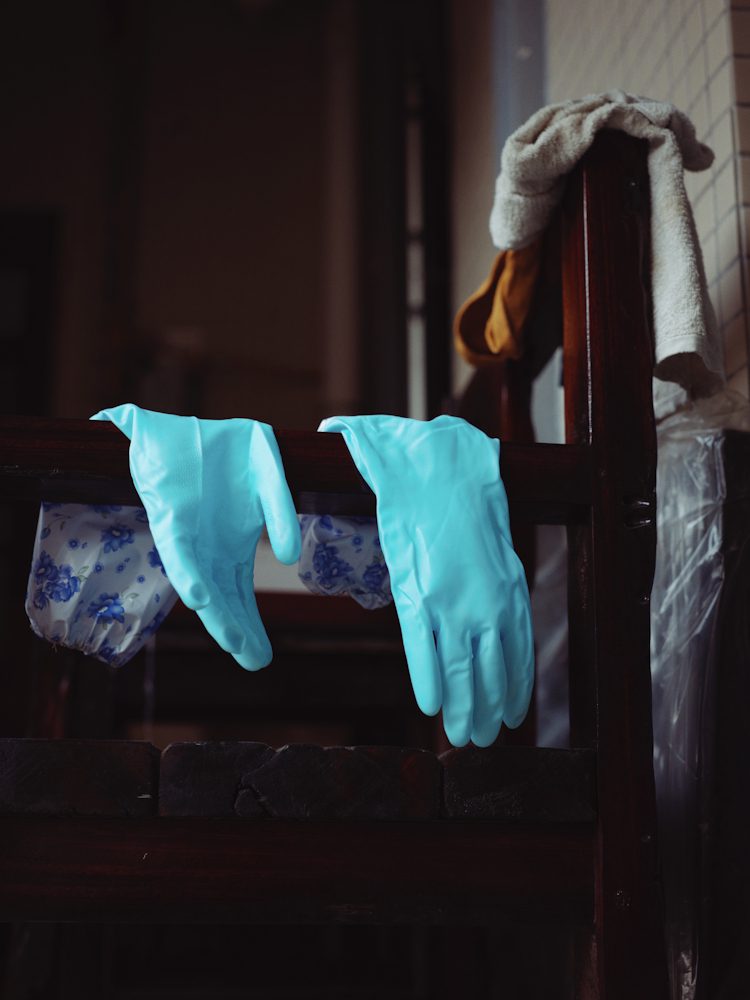
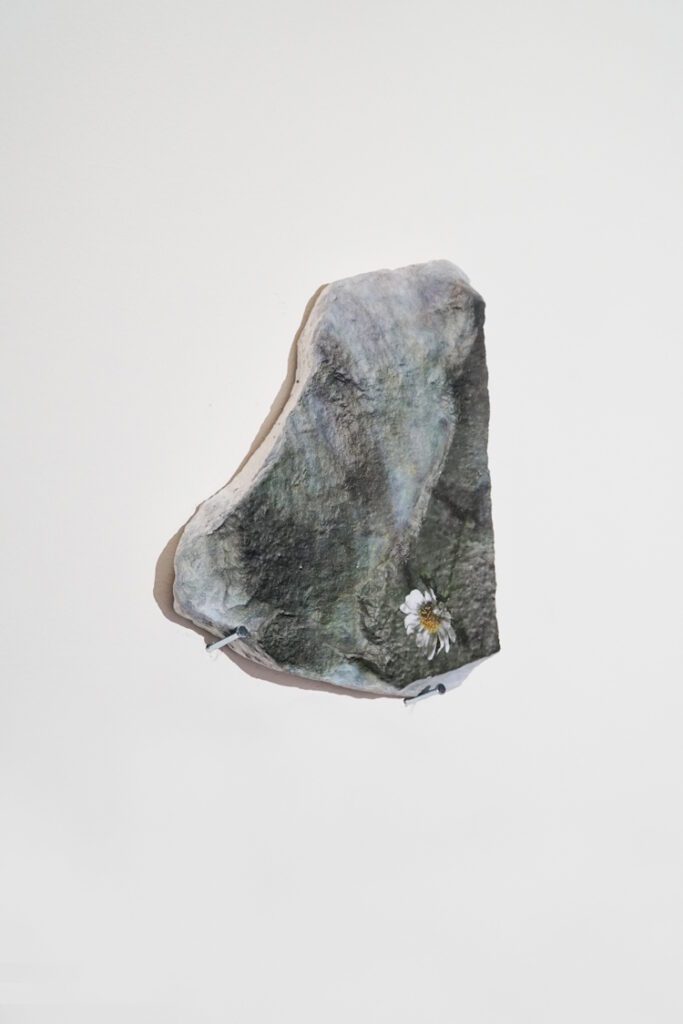
Complementing the series focused on his father, Lei approached his relationship with his mother by changing mediums slightly, using UV printing on stone, in works collectively gathered under the title Soft Shelter/Tangible Disappearance (2025). The result solidifies the softness and ephemeral nature of memory and fleeting moments of tenderness with his mother, “set in stone.” “What I am trying to solidify is not only the tender fragments of my own life but also a reflection on the ‘mechanism of forgetting.'” Stones of all shapes and sizes have long been used to ritualise, and carry the stories of our humanity, and in this series Lei takes faded memories found on a trip to his mother’s birthplace and sets them as memorials in stone.
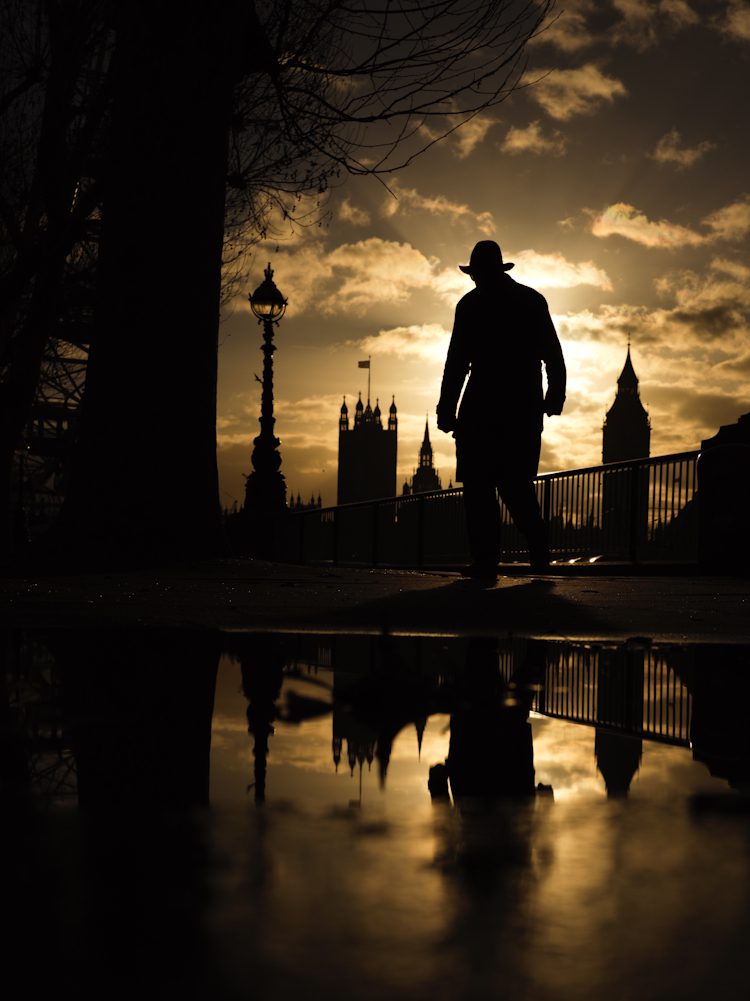
Lei’s photographic practice embodies a unique artistic voice that seeks to navigate the complexities of memory, identity, and social order. Through the projects mentioned above, The Paradox of Forgetting and The Stance of Ideals, and complemented by other works like Shadow Thames (2026), the artist broadens his focus to the public at large with an image taken of a solitary figure walking along the River Thames whose shadow creates another, perhaps alternate, world, a reflection that hints at presence and absence, clarity and ambiguity. His engagement with themes of stillness, absence, and adaptation invites viewers to reflect on their own experiences in our ever-changing world. His work seeks to articulate the intricacies of human experience through a quiet and contemplative lens and positions him as a necessary voice in the ongoing dialogues about the role of the arts in a digital age, addressing important themes like memory, identity, and society.
The value of images might be diminished by their digitised abundance, but Lei’s work serves as a reminder of the power of photography to evoke emotion, provoke thought, and foster connection. But let’s not fool ourselves: works that seek to engage with grand themes such as memory, identity, and social structures can demand that the viewer have some prior knowledge or understanding of the artist’s context and influences, in order to conceptually grasp what they are seeing before them. The artist must balance depth with accessibility. Lei’s work is deeply rooted in his personal cultural background, particularly Chinese traditions and family rituals. This cultural specificity might prove difficult for some viewers who lack personal awareness of what these events mean. Of course, memory and identity are universal themes; the question, and the challenge, for the artist, is always to create works where the specific and the universal meet in such a way as to offer the viewer access to something both familiar and yet compelling enough to elicit new and personal meaning from what has been presented.
Jonathan Lei’s photographic work stands in opposition to much of the imagery produced by contemporary digital culture by inviting us to engage with our own memories, identities and desires through his meditative works. His exploration of the tension between social order and individual ideals cultivates a space in which we can contemplate the challenges we each face between our own desire and the demands of the world around us. His artistic vision not only enriches the field of photography but also challenges us to reflect on the complexities of our own existence in an ever-evolving world.
References
Dill L 2024, ‘The death of stillness: navigating photography’s decline on social media and reimagining platforms for visual culture’, Medium, 15 September, viewed 31 July 2026, https://medium.com/@lucasvonflingern/the-death-of-stillness-navigating-photographys-decline-on-social-media-and-reimagining-platforms-afdcb2664d9d.
Freud S 1930, Civilisation and Its Discontents, trans. J Riviere, Hogarth Press and Institute of Psycho-Analysis, London.
Lei J n.d., project notes and artist statements, Jonathan Lei, viewed 31 July 2026, https://jonathanlei.art.
Images courtesy of the artist © Jonathan Haolin Lei. All unattributed photography by Jonathan Haolin Lei.
This review is part of a supported series by emerging artists, including Jonathan Haolin Lei. Written and edited independently by Trebuchet; all views are the critic’s own.
Barry Taylor writes and speaks about the intersections of philosophy, theology and contemporary culture. In past, he was the road manager for AC/DC during the Bon Scott era before becoming a Los Angeles theologian.