Gordon Cheung has built a reputation for creating layered works that draw on financial newspapers, maps and other printed matter, overwriting physical and digital material into a palimpsest of aesthetic information. Raised in London by Hong Kong-born parents, his is a vantage point that moves between East and West, between classical art history and the logic of contemporary capital; and what he chooses to paint on proves as meaningful as what he paints. His work is held in the collections of the Museum of Modern Art, New York, the British Museum and the Hirshhorn Museum, Washington D.C., which raises an uneasy question about how the work, and its reading, sits within the framework of consecrated recognition. On the surface, his practice displays the constructive aims of a restless creative mind. Capitalism and colonialism are monolithic systems, but one senses that Cheung is drawing out how those institutional forces make and break us.
Exhibition Notes: Gordon Cheung – Many Worlds, One Mind
Many Worlds, One Mind, Gordon Cheung at CLOSE Gallery
6 June – 15 August 2026
CLOSE Gallery, Hatch Beauchamp, Taunton TA3 6AE
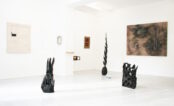
CLOSE Gallery, Somerset is proud to present Many Worlds, One Mind, a major survey exhibition by contemporary multi-media artist Gordon Cheung, on display from 6 June – 15 August 2026.
Through 28 works of sculpture, painting, print and etching, this exhibition showcases Cheung’s multi-disciplinary meditations on global capitalism and its creation of social, economic and political mythologies – reflections that are particularly resonant against the backdrop of current international hostilities.

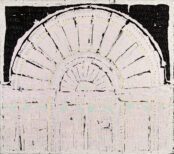
Many Worlds, One Mind includes works from Cheung’s ‘New Order’ series, such as New Order Still Life with Flowers and a Watch (after Abraham Mignon, c1660-1679), which followed research on the first recorded ‘economic bubble’: the Dutch Golden Age. By using an algorithm that re-orders pixels of high resolution Rijksmuseum photographs of Dutch Golden Age still life, often featuring a tulip, the New Order series brings into sharp relief our fragile mortality, futile materialism and the repetition of history – from the 17th century to the digital age.

Passages of Time, meanwhile, incorporates Cheung’s renowned motif of working with Financial Times stock listings. The sculpture, which draws inspiration from traditional Chinese ‘scholar’s rocks’ or ‘spirit stones’, contemplates a world formed by datascapes and shaped by the light speed movements of capital that teeter between utopia and dystopia.

Raised in London by Hong Kong-born parents, Cheung developed a visual language that moves fluidly between the traditions of East and West as well as classical art history and contemporary technological innovation, combining scientific processes and sculptural construction and including elements of 3D printing and digitally mediated surfaces. As data and imagination coexist on his canvases, he invites audiences to consider how the systems that shape our world trade markets, beliefs and memory continue to define the landscapes we inhabit, both real and imagined.
Within the works of this exhibition, illusion and reality continually shift, classical imagery dissolves into digital structures and historical references are reframed through the language of modern innovation. In Many Worlds, One Mind, Cheung harnesses his unique intercultural voice to question who the architects of contemporary life are, and what it means to be human in our ever evolving and increasingly polarised civilisations.
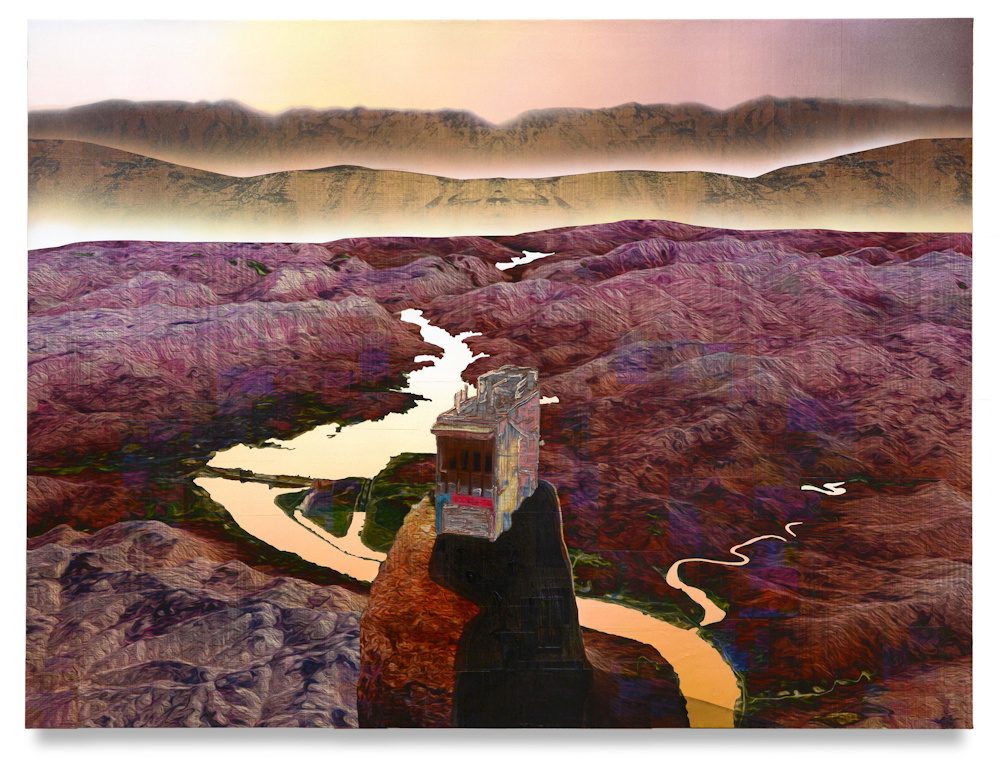
Financial Times stock listings, acrylic, pumice and sand on canvas and sail cloth
Images courtesy of Close Gallery © Gordon Cheung

The aim of art is to represent not the outward appearance of things, but their inward significance. – Aristotle