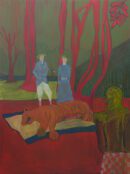
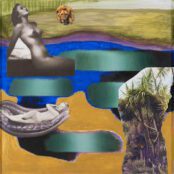
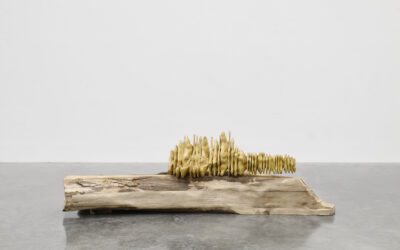
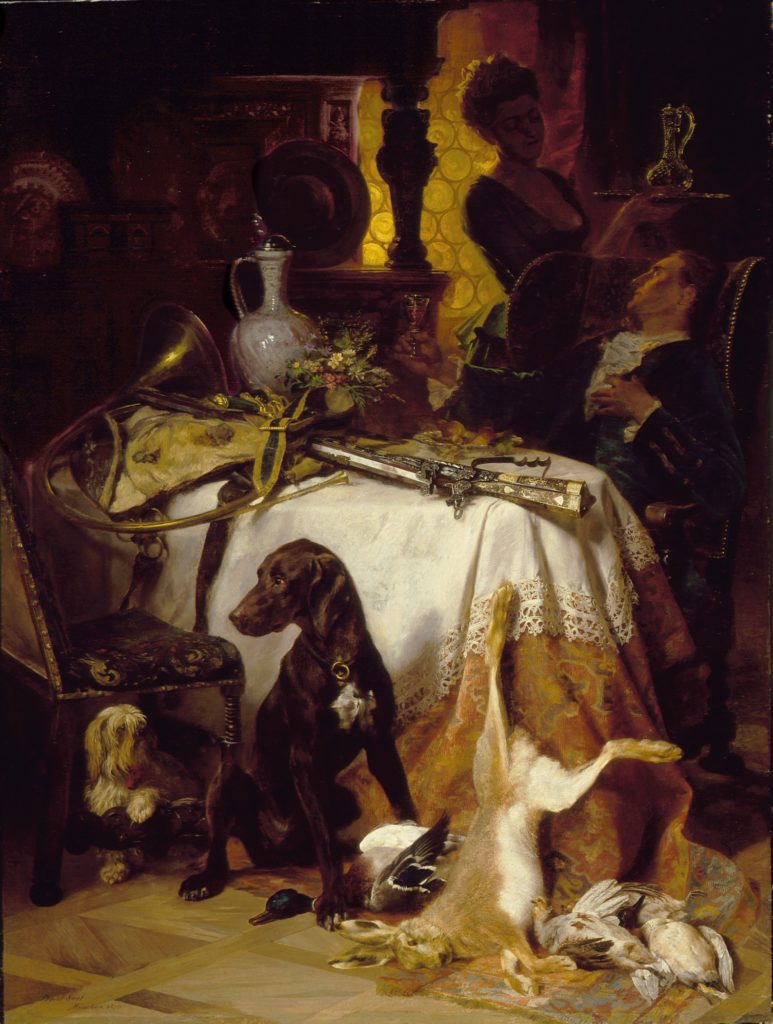
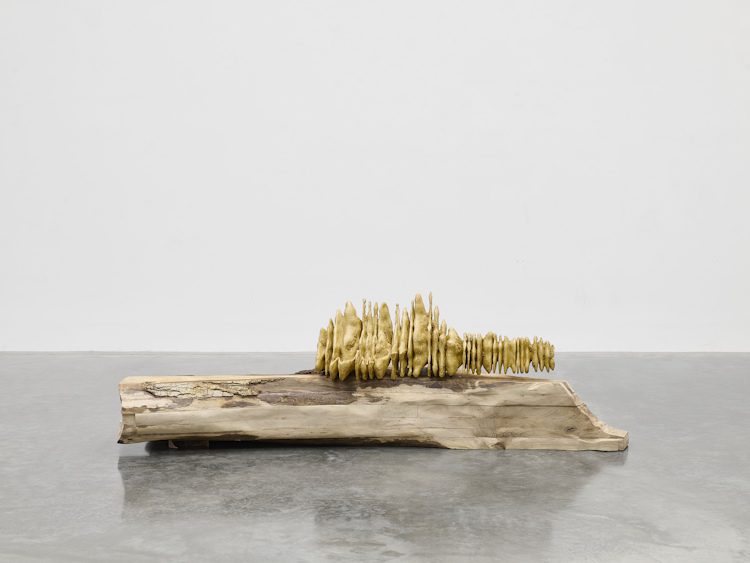
Jupiter Artland is a contemporary art park and gallery outside Edinburgh. Founded in 2009 by philanthropists Robert and Nicky Wilson, the park has become a significant art institution in Scotland, culminating in a 2016 nomination for Art Fund’s Museum of the Year. Spread out over 120 acres of meadow, woodland and indoor gallery spaces, it is home to over 30 permanent and unique site-specific sculptures from artists including Phyllida Barlow, Christian Boltanski, Charles Jencks, Anish Kapoor and Antony Gormley. Its temporary programme recently brought Tai Shani’s The Spell or The Dream to the orchard. As well as art, there is a strong programme of events for the community, students and art-lovers both specialist and general. While visiting the Extraction exhibition, Trebuchet had a chance to talk to Nicky Wilson about the past, present and future of Jupiter Artland.
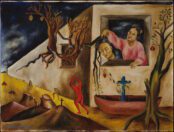
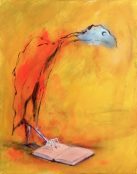
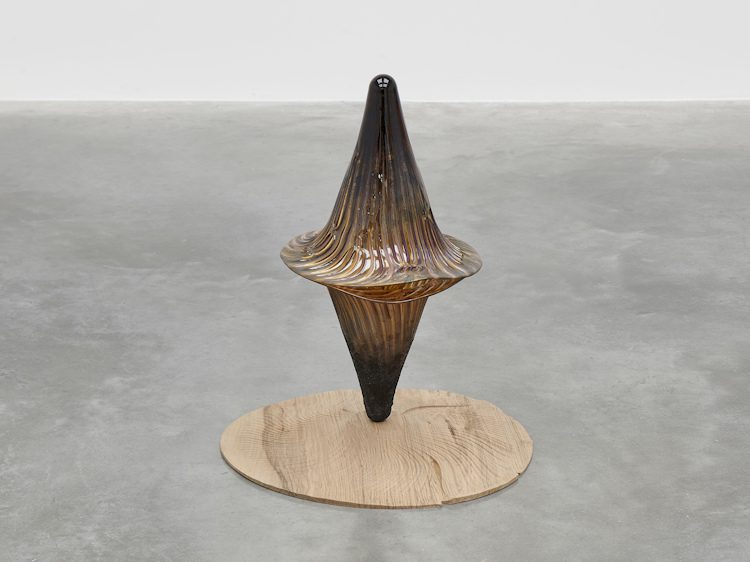
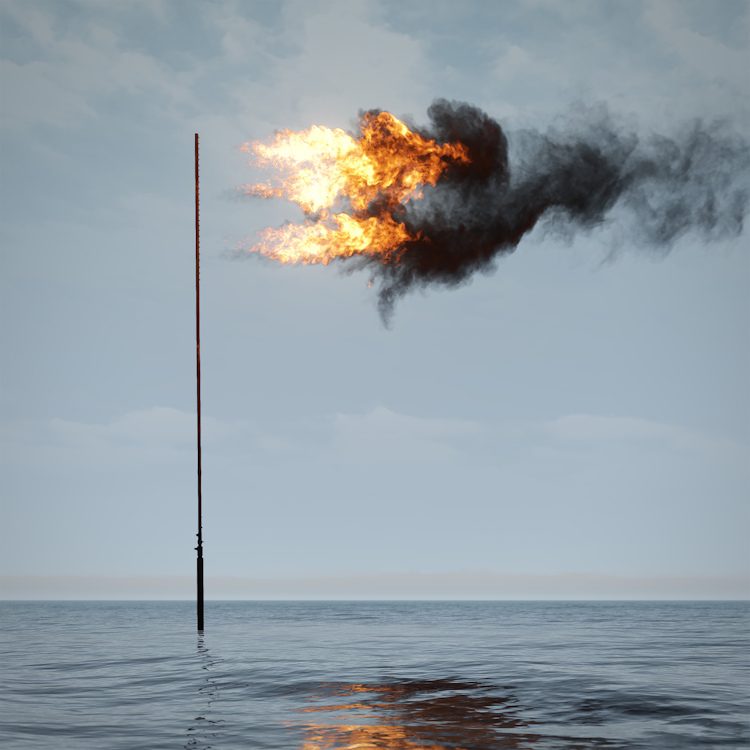
Nicky Wilson: “… This exhibition [Extraction] makes me extremely happy, because what we have here is some truly world class artwork. We have john gerrard and Marguerite Humeau, we are nurturing new talent such as Siobhan McLaughlin, and we are looking back and bringing treasures from estates that people don’t get to see often such as Carol Rhodes and John Latham. That is the perfect way to speak about a subject: from many angles, from the living, the new, the deeply experienced. And alongside that, it is being activated by landscape and the activism of Jupiter Artland.
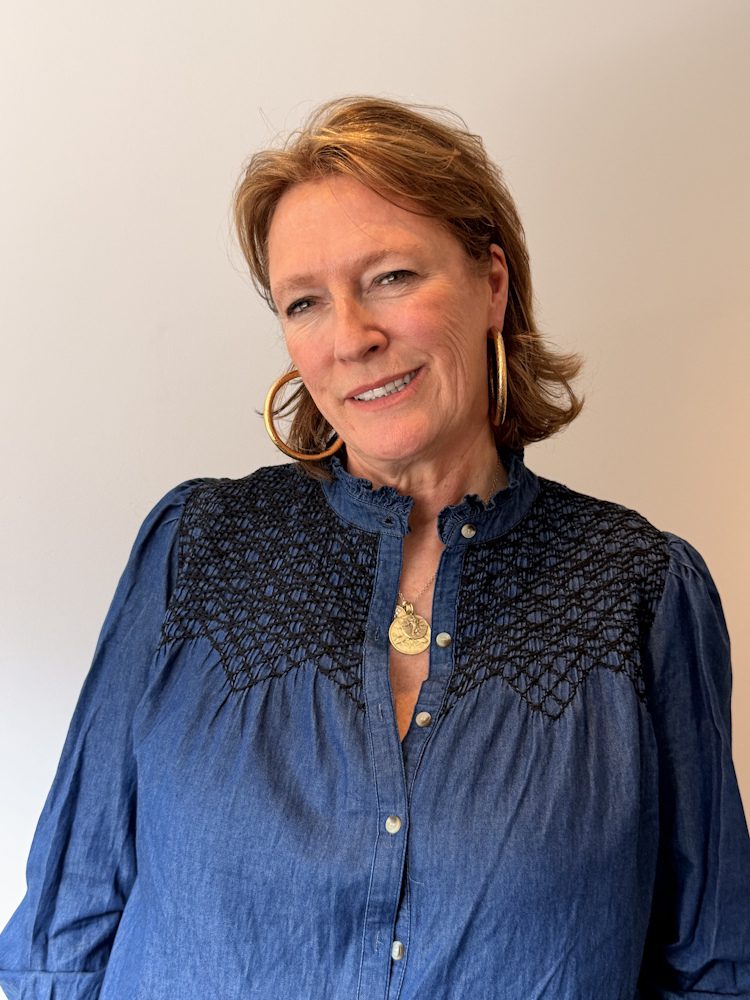
For me, that emulates the way Jupiter started. The learning and education programme was always embedded from the very beginning. I have a very strong ethos of art and agency and activism, creative activism for young people in Scotland, and a belief that every young person in Scotland deserves to have this kind of interaction with their potential, seen, realised, or at least acknowledged.
The inspiration is that moment that changes everything. For so many young people it was that one adult who showed interest, or that one interaction that changed the axis. The spell and the dream. People will never forget that. It is an otherworldly experience, but it is there, and it is analogue too.
That same drive is what drives me personally, this vision of social equity. That is the bottom line. I hate putting big, lovely labels on it, but I have always found it so frustrating that circumstance and happenstance can change a whole life. I have been working in education and the arts, on governors and schools, for a long time. I am very interested in education and welfare. I have chaired committees on this. I know the impact of good experience and bad experience.
Artwork has a deeply profound ability to change the soul. In a world where everything is marked in schools against attainment, where a series of evaluations makes most people feel like they are failing, this place is meant to be a little slice of not feeling bad about yourself, and also feeling that you can do something for yourself.
There are real questions that need to be asked, and we need to speak in one voice on this.
You seem like you’ve got a fairly strong handle on it.
I have strong opinions, maybe too strong, I don’t know. I have just started a Substack called The Unanswered Question. The first one was: why do we pay for any fuel? And the next one is going to be: why am I still here? Not in an existential sense, but why haven’t I handed over authority and responsibility? Why aren’t we all asking that? Why are we holding on for so long, when we should be stepping back and creating our second lives? All these young people are stagnating because we don’t move out of houses, we don’t share the wealth, we just sit there. So that is my next question. Very unpopular, but there it is. I am probably a bit of a social activist, and Jupiter was always started with that in the back of my mind.
In terms of support and educational nurturing I spoke to Hamish Halley, I think he’s the production manager. He’d started out as an invigilator, and then moved on from there.
He has worked with us for a few years, is very talented and is on his way up and now a curator. And I say to all of my team: I want you all to be directors at some point – you are all talented and its my job to help you there. My aim is to teach you to be able to do everything so you can run an organisation from the inside out. You should be able to clean the galleries and understand how to run the café. I am not going to make you do it, but I do it if it needs doing, so watch and learn.
A good director is someone whose vision is blended throughout the whole organisation. And to be a good curator perhaps curatorial MA will help but more importantly a curator is someone who responds strongly to artwork, is a creative, and has learned the artistic language of our culture who has something to say in this world or ours and cares who gets their voices heard.
I genuinely believe every single one of the people on my team could be a museum director. They are talented enough. They know that they cannot sit back and wait for natural progression. You have to be entrepreneurial. You have to work smart, have a vision, have your own ethics. It is not good enough to just have a PhD. You have to be better, and passionate, and understand your audience and bring your own authenticity to an organisation.
I guess the tough question would be: is Jupiter trying to do too much?
The honest answer is yes. We are doing too much. Our marketing channels are full of everything we are doing, and my big problem is also legacy. I have got to let go. I am not in a world where nobody can do as well as I can. The second Substack is really me talking to myself. I must learn to step back and trust the future, which is what I am doing. However I am restless, and I do not want to not step down until I have done as much as I can to effect social change work. I want Jupiter to be a place of magic, somewhere to be inspired and a place that raises those tricky questions and makes you think ‘yes, I agree” and then go out and do something about it.
So, is Jupiter doing too much? Yes. Are we successful at everything? No. But we have got a good heart and world class artists want to work with us, which is a great compliment. I think they want to do that because we are probably not establishment. Quite anti-establishment, actually and just a little bit anarchic. We have views on everything. But we also believe in beauty, the soul, art, and great contemporary thinking.
Take an artist like Siobhan McLaughlin, in some ways, she feels like a quintessential Jupiter artist.
She really is and her development is emblematic of that too. She is a polymath, highly talented, intelligent, sensitive, and intuitive. She understands place, its history its people, and particularly the land. The landscape is that the gift we have here. The land holds the potential, a kind of spiritual flow and questioning.
This is also a place with a family at its heart. The family have made their living out of helping people, literally through a brand called Rescue Remedy that makes people feel a bit happier, safer, less afraid and more brave. That kind of embodies Jupiter, doesn’t it?”
Jupiter Artland’s Jupiter+ continues to extend its engagement model beyond the limits of place and, now in its fifth year, has helped emerging voices in the art world reach new audiences. It’s ambitious and the sort of activity that resonates with Wilson’s vision of how art can bring people together.
Jupiter Artland infoline: 01506 889900 (enquiries@jupiterartland.org)
Jupiter Artland: https://www.jupiterartland.org
Jupiter+: https://www.jupiterartland.org/jupiter-plus/
Images courtesy of Jupiter Artland and the artists © the artists
The aim of art is to represent not the outward appearance of things, but their inward significance. – Aristotle