From the gauzy halation of the early cheesecake pin-ups when she was still just Norma Jeane, through to the existentially brittle, salt-etched stills taken in her last ever shoot on the Santa Monica shoreline in 1962, Marilyn Monroe consistently presented herself to the lens as an endlessly renewable commodity of desire and melancholy. Images of the quintessential screen icon do not so much record a life as manufacture a constructed presence whose currency was sex and vulnerability: a beguiling persona that would eventually come to overshadow the human at its beating heart.
While we now accept Marilyn as something close to mythological, it is important to recall that she was celebrated as an auteur of identity before her image overwhelmed mass culture. Early films such as Gentlemen Prefer Blondes (1953), and confirmed classics like Billy Wilder’s Some Like It Hot (1959) reveal a consummate skill for timing and affect masquerading as naturalness. What tends to be read as effortlessness in all of her performances is, on closer inspection, a series of masterfully calibrated displacements. Laughter pitched to disarm. Pout sculpted to request pity. Gaze angled to solicit myth. The film-going public received not a woman in Marilyn Monroe but a powerful projection of the feminine archetype.
It was perhaps inevitable then that her on-screen magnetism spilled into the visual arts of the 1950s and 60s. Both Pop and neo-Dada practitioners found in Marilyn a pre-fabricated icon whose replication would test the very limits of fame and commodity. Significant artists such as Richard Hamilton and Pauline Boty, acutely aware of her cultural presence, mined the cache carried in the reproduction of her image. Andy Warhol serialised her face into icons of reproducibility with a near-industrial coolness. Warhol’s Marilyn series (1962) comprises not portraits but experiments in the ontology of celebrity: these infamous works, now among the most coveted objects in the art market, are ironic testaments to how an image can be extracted from a life and monetised as pure emblem.
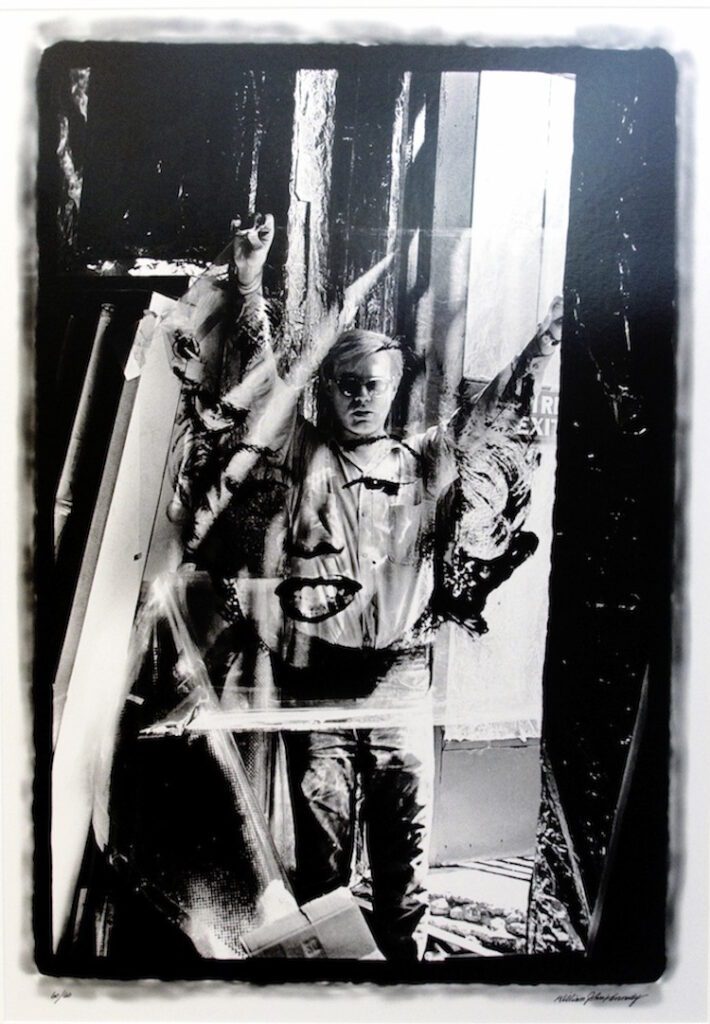
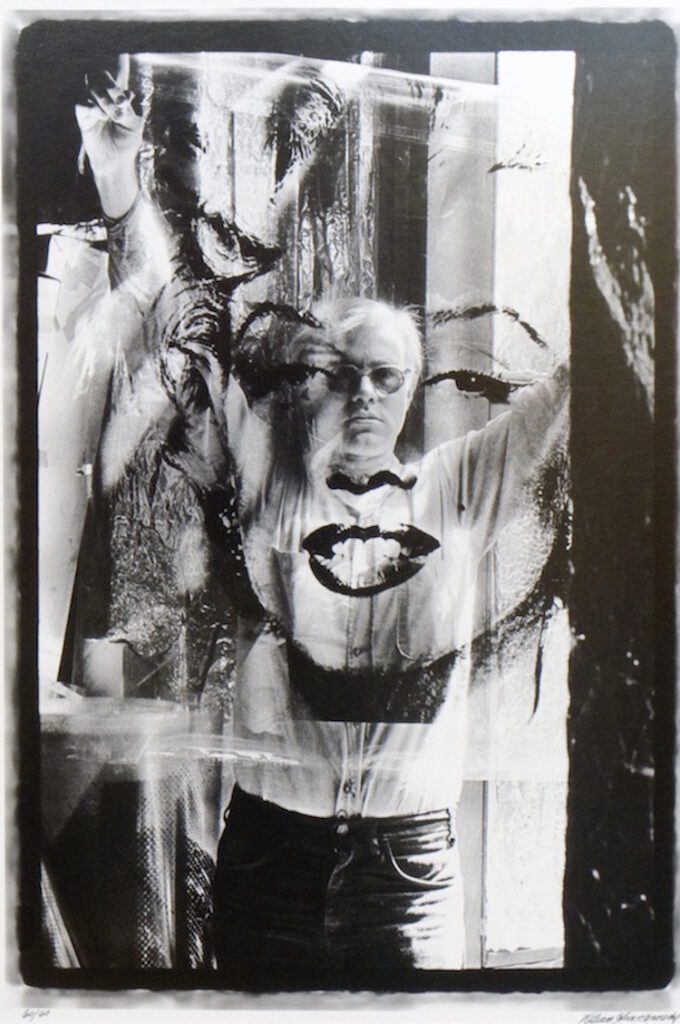
Marilyn Monroe: A Portrait at the National Portrait Gallery, timed to the centenary of Monroe’s birth, offers a rare chance to see the genesis of this very artwork in photographer William John Kennedy’s Warhol Holding Marilyn Acetate (1964). Kennedy’s striking image, made at the Factory in New York in 1964, shows Warhol holding the acetate that would develop into the Marilyn oeuvre. An arresting instance of becoming, the acetate’s translucent framing of his own visage stages an eerie mise-en-scène as two icons meet, overlapping in a moment when the machinery of mass reproduction is exposed.
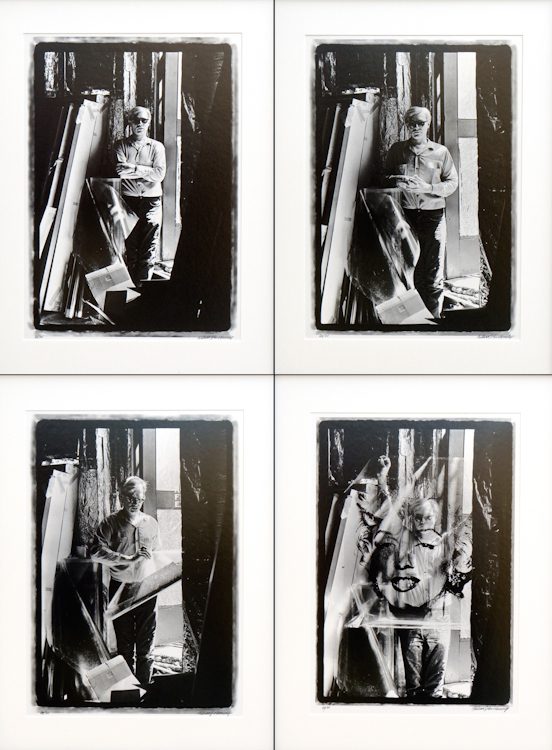
The image’s significance pivots on the nearness to mythological genesis. It is a backstage photograph that confers materiality on what would otherwise circulate as image alone. The acetate hovers between the viewer and Warhol, implicating the artist in the technological choreography that produced an iconic work. It is this visual evidence of technique that situates the photograph as both testimony and artefact. In this context, Marilyn Monroe: A Portrait acquires even stronger resonance. The Kennedy photograph does not merely illustrate a story; it rewrites it, insisting that the origins of iconography are as consequential as its endless reproduction: capturing Warhol inscribing Marilyn in a palimpsest of celebrity, artifice and elevation.
Warhol Holding Marilyn Acetate (1964) is one of an unseen cache of Warhol portraits by William John Kennedy that surfaced only after the photographer’s death in 2021. Kennedy (1930–2021) left behind a compact forensic kingdom of negatives and transparencies shot at the Factory between 1963 and 1964: the precarious, fizzing inflection point when Warhol was begetting the wigged persona that would later ossify into legend. These works remain accessible by appointment at the Warhol Kennedy Residence in London. It stands as testament to the value of these images that Warhol Holding Marilyn Acetate, captured during Kennedy’s first photo session with Warhol, now hangs at the National Portrait Gallery in celebration of another icon of the twentieth century, Marilyn Monroe.
Marilyn: A Portrait exhibits at The National Portrait Gallery from 4 June – 6 September 2026
Warhol Kennedy Residence
Images courtesy of Warhol Kennedy Residence / National Portrait Gallery © WKR
The article is part of a supported series on Warhol photography and WKR
John-Paul Pryor is an editorial and creative director at the cutting-edge of cultural life. His output is multi-disciplinary, diverse and independent in spirit, spanning journalism, art direction, book publishing and event organisation.