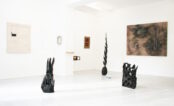
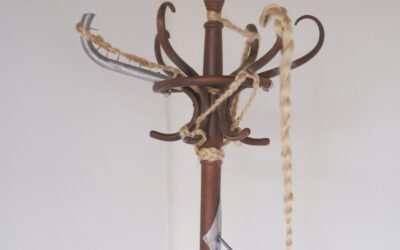
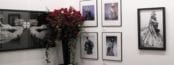
Hosting more than three hundred artists in the centre of Paris since 1965, the Cité internationale des arts has become the paradigm for what a residency institution can achieve. Possibly, its success stems from a vision where creators from across the globe discover fresh perspectives within the city, and in doing so, enliven the concept of the French capital for locals and the wider world.
It’s a symbiotic process that augments the life of a metropolis by challenging existing norms and, through that engagement, bolstering it. Romantically, the idea of an urban environment as an emotional canvas alive with drama and inspiration has a timeless appeal, although one might feel that, like most European hubs, the notion of confident cultural evolution has come under pressure from conservative elements viewing hidebound nostalgia as the primary path forward. Such viewpoints somehow overlook the point that development necessitates change.

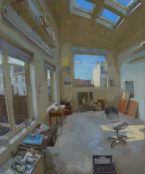
This institutional vitality is physically anchored in two iconic areas: the Marais and Montmartre. While the former serves as a bustling hub of contemporary heritage in the fourth arrondissement, the latter preserves the avant-garde spirit of the hilltop studios (Cité internationale des arts). By maintaining these distinct environments, the foundation ensures that its residents remain deeply embedded within the layers of Parisian history while simultaneously pushing against the boundaries of contemporary practice. Overseeing such a dual-faceted infrastructure requires a leadership style capable of navigating both tradition and progress.
From 2016, the director of the Cité has been Bénédicte Alliot, who oversaw the institution during the COVID pandemic and its aftermath (Alliot 2021). Responding to Trebuchet’s questions, we wanted to learn how organisations build for success and how artistic exchange operates in a discursive climate that privileges financial metrics.
What is your role at Cité and what do you see as your greatest responsibility?
As General Director, I oversee the artistic vision, the operational heartbeat, and the community spirit of the Cité. My greatest responsibility, and that of my team, is to ensure that this historic institution remains a fertile ground where artists from all over the world are able to breathe, free to create, experiment, and grow, while preserving the unique atmosphere that has made the Cité a haven for creativity for over six decades.
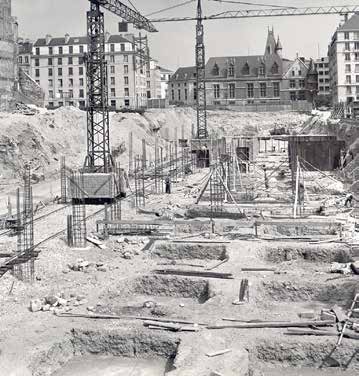
What does artistic residency mean in 2025, and how has the model evolved since the Cité’s founding in 1965?
While the world of art has changed profoundly since 1965, our core values remain the same. We remain deeply aligned with the spirit in which the Cité was founded: offering artists the most precious resources: space, time, and an international community, right in the heart of Paris. What has evolved is the context: today’s residencies exist within a hyperconnected, rapidly shifting global art world. Yet the fundamental need for a supportive environment where artists can reflect, explore, and create continues to fuel our mission.
How do you balance preserving the Cité’s historical mission with responding to contemporary shifts in how art is made and experienced?
We build on our archives for different projects, particulary Emersions : A Living Archive, now on its third iteration, it tells the story of the Cité from different perspectives. We look for different voices in this long history because we strongly believe in confronting different points of views.
The Cité has always been a place of cultural exchange, diversity, and creation. This identity compels us to reinvent ourselves constantly. As we accompany a global community of artists and cultural professionals, we also engage with the issues and concerns that matter to them today.
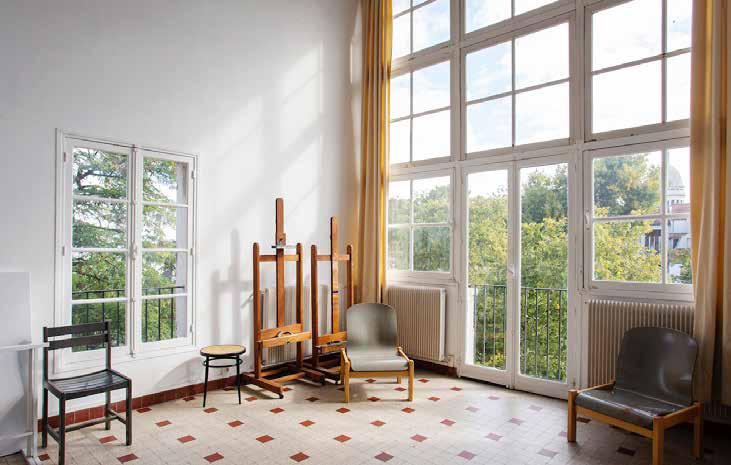
What makes a successful residency from your perspective? Is it about the work produced, or something less tangible?
A successful residency cannot be measured solely by the art produced. That is one of the main reasons why, at Cité, we do not demand a restitution or the production of a work. Often, the most profound outcomes are invisible: the ideas sparked, the collaborations formed, the confidence an artist gains and the advancement to his or her research. A residency succeeds when it gives an artist the freedom to fail, to experiment, and to emerge transformed. The work is important, but the personal and creative evolution is what endures.
Artist residencies worldwide face pressure to demonstrate “measurable outcomes.” How do you protect the space for experimentation and even failure?
We resist the temptation to quantify creativity. Metrics can never accurately capture the moments of insight, the experiments that don’t “work,” or the seeds that grow years later. Not to mention the fruitful collaborations that result from it. Over the years, we’ve seen many “success stories” in which time at the Cité served as a turning point, a life-changing experience to some : artists discovering new techniques that later became central to their practice, or making conceptual breakthroughs that shifted their trajectory. We take genuine pride in accompanying artists who pursue uncharted paths, who navigate outside the circuits of galleries and art fairs. Former residents are our greatest ambassadors; supporting their evolution is the most meaningful outcome we could hope for.
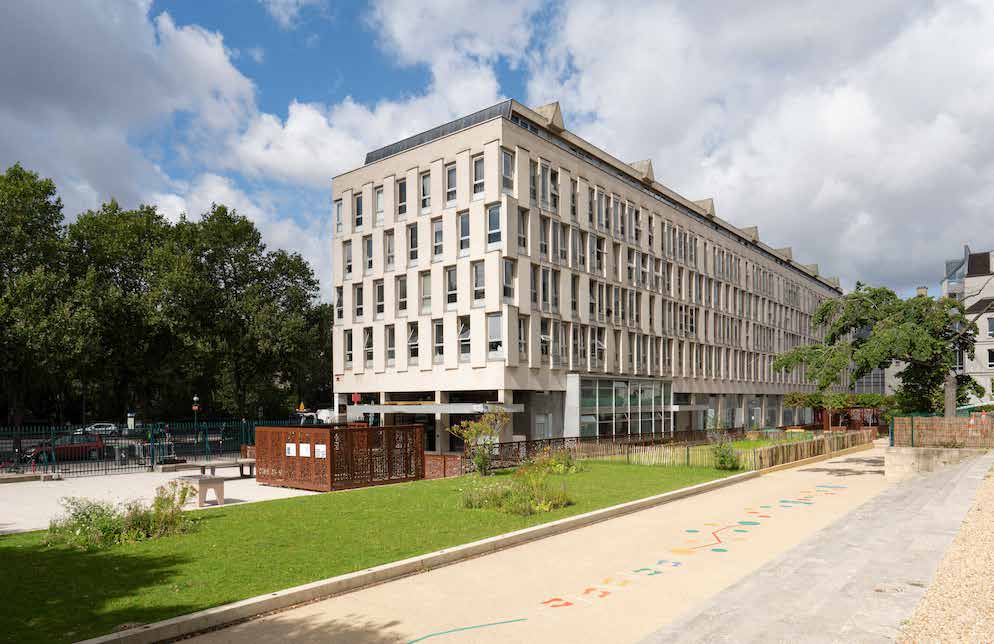
With over 300 studios, you’re essentially running a small international village. What cultural tensions or beautiful misunderstandings have taught you something about art’s role in bridging differences?
The Cité is indeed a village, an international one! It is a place of cultural and ideas exchange. Conversations here often reflect global issues, and those tensions are welcomed into our fold.
In this sense, the Cité also serves as a site of cultural diplomacy and transcultural dialogue, where unlikely friendships can form: a Polynesian artist and an Algerian artist, for example, or collaborations emerging between artists whose contexts rarely overlap. These encounters often lead to profound learning and understanding. They reveal art’s unique ability to bridge differences, create empathy, and build connections that would be difficult, if not impossible, outside the Cité.
If you could wave a magic wand, what would you change about how the art world supports artists’ development?
As the Director of a non-profit organization, I would strengthen the ecosystem that genuinely supports research and creation. With a magic wand, I would foster more sustained, flexible, and long-term support for institutions and initiatives that prioritize artistic development (like the Cité), not only production, visibility, or market outcomes.
Read more about Cité internationale des arts in Trebuchet 18: Foreign Objects

Read more in Trebuchet 18: Foreign Objects
Featuring: Our Foreign Culture: Exploring Sufism and Post-Colonial Art, Outsider Stars: Sverre Malling. Dalí’s Lobster Phone And The Language Of Desire, Curves Of Thought: Simon Tayler, Bones, Helmets And Uncomfortable Truths: Victor Spinelli, The Inevitable Otherness Of Being Human, Foreign Objects In Local Places: Orobie Biennial, Europe’s Art Weeks Come Together: Spider Network, The Insecurity Collection: National Galleries, The Oracle Speaks In Silence: Ljubljana Biennale
Cité – Marais
18, rue de l’Hôtel de Ville
75004 Paris
Open Studios, every Wednesday from 6 to 9 p.m.
Exhibitions in the Galerie and the Petite Galerie, installations in the Vitrine
See the Arts and Culture programme
Cité – Montmartre
24, rue Norvins
75018 Paris
Open Studios, 2 times a year (Summer and Winter editions)
Winter edition: February 14–15, 2026
Summer edition: June 19–21, 2026
Images courtesy of Cité internationale des arts
References:
Alliot, B. (2021) ‘The Cité internationale des arts: a space for creation’, Journal of Arts Management, 12(2), pp. 45–50.
Cité internationale des arts (2024) Our history. Available at: [suspicious link removed] (Accessed: 19 January 2026).

The aim of art is to represent not the outward appearance of things, but their inward significance. – Aristotle