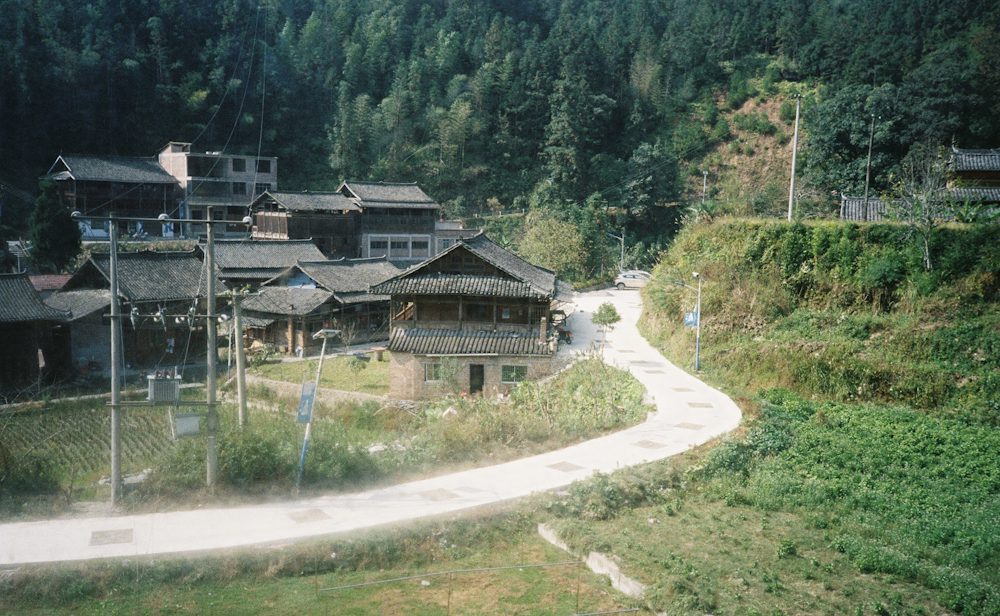
In the Autumn of 2024, artist Weiyi Chen (b. 1997, Chongqing, China) travelled to the remote village of Fengdeng, located in the Qiandongnan autonomous prefecture of Guizhou, a mountainous province in the southwest of China.
The village, renowned in the region for its Dong ethnic minority culture, is marked for its agriculture, particularly the tiered paddy fields that hug the mountainside; singing in the local Kam dialect, an oral language with no written script; and textile production, an ancient hand-dyeing and hand-weaving tradition that makes use of the area’s cotton cultivation. Once a pastime passed down from generation to generation through the minority’s matrilineal social structure, with garments being produced for ceremonies and celebrations, has in recent years become the main source of income for the village – following the establishment of production lines propped up by fashion houses and their collaborative approaches to commerce, as well as government funding introduced to promote minority craftwork and cultural heritage.
Textiles have long occupied an expanded role within Chen’s practice, appearing in sculptural, conceptual and performative forms. Previous works have included wearable sculptures woven from discarded dog hair, exploring sentimentality, sustainability and waste. Elsewhere, cage-like textile costumes addressed the confinement and treatment of companion animals within contemporary Chinese society. Other projects have turned towards more intimate subjects. Suspended fibre collages considered familial bonds, emotional burdens and the transmission of generational trauma, while knitted cocoons and lumen exposures documented the remains of meals shared with family and friends. In each case, Chen demonstrates a sustained interest in the social and emotional histories embedded within materials. And so, having graduated the year before from Chelsea College of Arts’ Textile Design masters programme and with previous personal experience working for a fashion brand that sourced fabrics produced from that very village, Chen arrived on the residency keen to observe, embrace and be educated by the repetitive, communal labour that underlies the traditional textile production, with the aim to incorporate and absorb any learnings into her established artistic language and output. Yet the residency also raised broader questions about how an artist might represent, interpret or translate the labour of a community to which they remain external.


During that original three week residency programme in Fengdeng, Chen was initially struck by the region’s natural landscape, an experience unfamiliar for someone who was brought up, and spent much of their life, residing in major cities. While learning from the day to day routines of the village’s cottage textile industry – from cotton spinning to loom weaving – she acknowledged the importance of such surrounding ecology, and how the labour of the local women is intimately underpinned by the land on which they live.
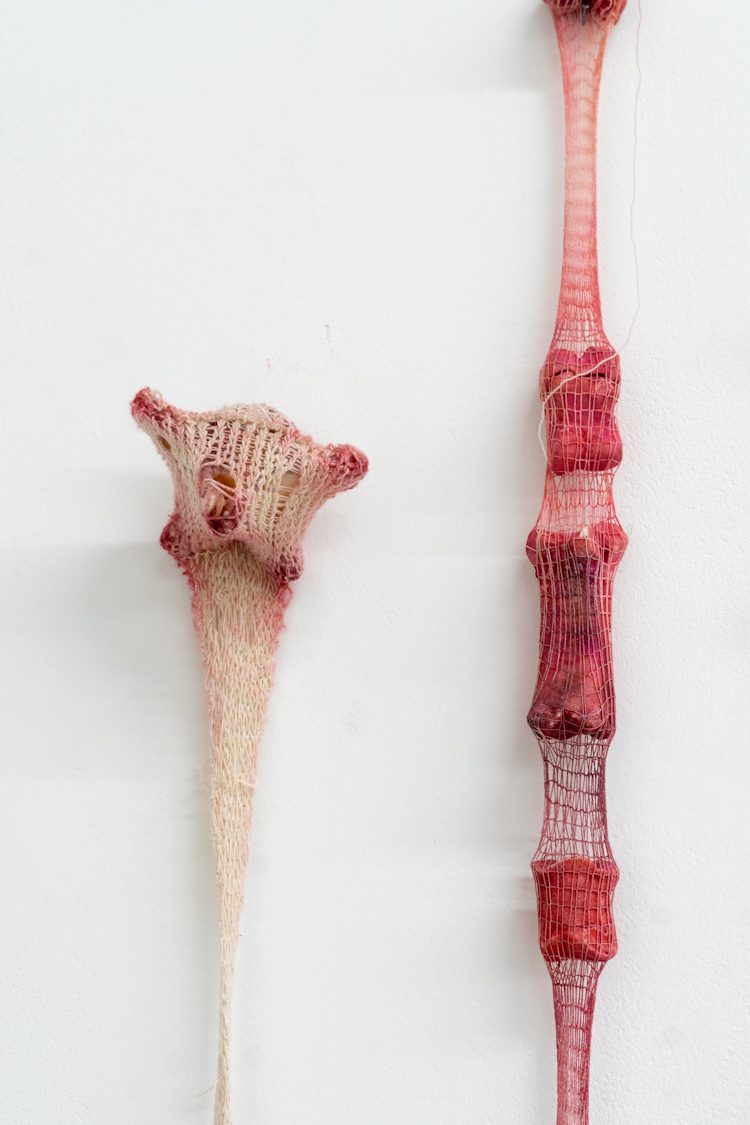
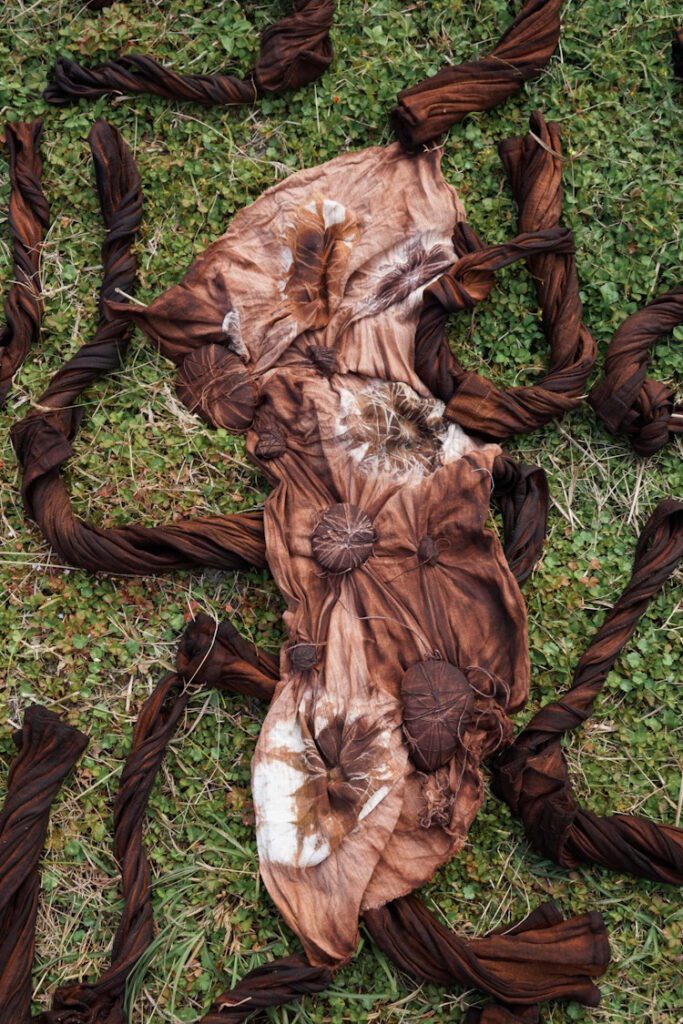
Textile production can only ever be a seasonal endeavour, not only due to the dependence on the cotton harvest, but also as certain dyes require outdoor drying and direct sunlight to fix the pigment to the fabric fibres, and others are only available when their natural source is in season. Blue dye, for example, is procured from the fermented leaves of the indigo plant, yellow dye from the soaked and simmered bark of the Barberry bush, and red dye from the boiled heartwood of the Sappan tree. Chen’s early experimentations with dyeing, therefore, worked within that temporary timeline set out by mother nature, using dioscorea cirrhosa root and a process of repeated daily dyeing and air drying. Repetition plays a significant role in her practice. An acknowledgement of the time and emotion embedded through artmaking. Which is itself adaptable to changing environments and shifting mindsets. Chen became part of the cycle of labour, resulting in works that carry the memory of their own making, existing as physical evidence of both the otherwise unseen efforts of manual work and her own time-limited village visit.
Chen’s ongoing Veins project, a durational, interdisciplinary body of work that to date spans three return trips to Fengdeng, makes reference in its title to the warp and weft lines of the weaving process, the mineral deposits located in the encircling mountainside and the circulatory veins that return blood to our lungs. Inspired, not by a romantic encounter with a remote community, but emerging from that aforementioned, pre-existing commercial connection, the project occupies a productive tension between observation and participation, documentation and aestheticisation. The question of how an artist represents the labour of a community to which they remain, in certain respects, an outsider, becomes one of the project’s central concerns.
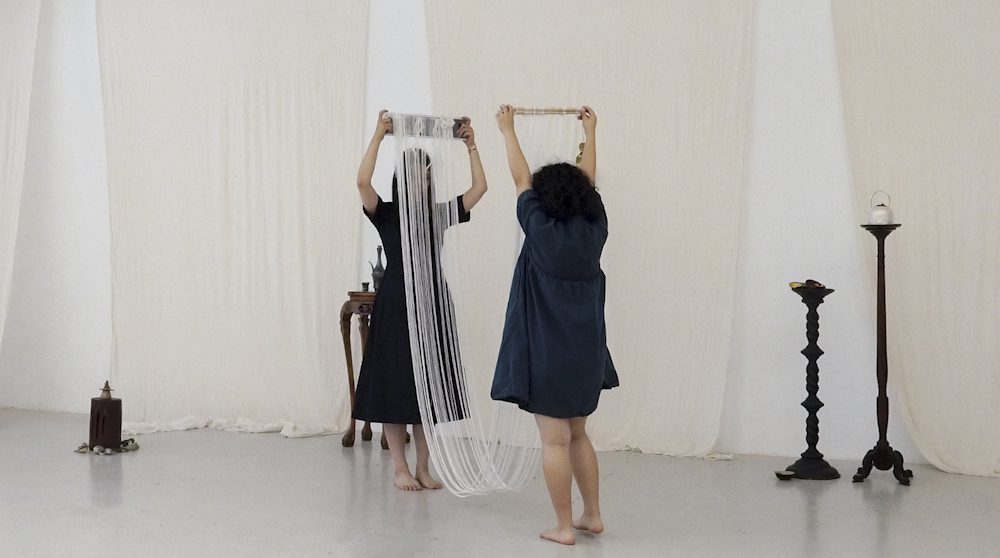
Highlighting that innate interconnectedness between labour, the land and the body, her 2024 moving-image work Souls Grown Deep by the Mountain documents the textile production, idiosyncratic singing and surrounding landscape of the Dong minority region – beginning from a point of outside observation, and ending with the artist as active partaker in the cultural craftsmanship. Alongside, Souls Grown Deep with the Threads (2024), a performance piece requiring two participants physically and metaphorically united by their shared attempt to contain and counterbalance a matrix of fragile threads, emphasises the importance of collaboration, lineage and the intergenerational transfer of knowledge and expertise. The title partly recalls Chen’s memory of seeing Souls Grown Deep like the Rivers: Black Artists from the American South at the Royal Academy of Arts in London, though here the phrase is re-situated within the landscape, labour and embodied memory of Fengdeng.
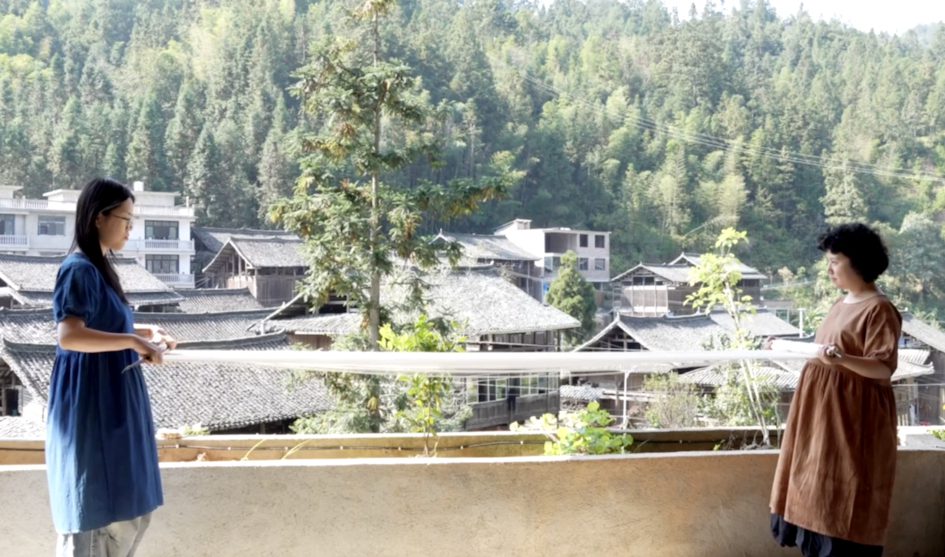
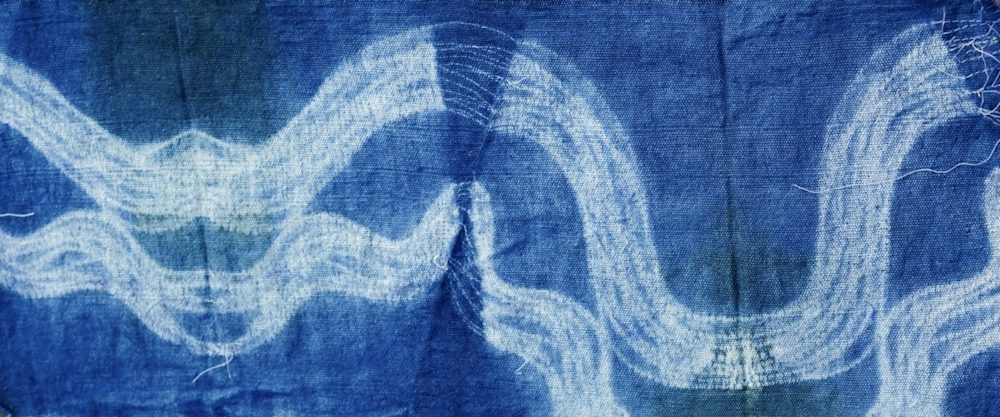
As Chen has assimilated and acclimatised to the Dong way of life over her subsequent visits, certain societal observations and questioning have come to conceptually drive her continued artistic examinations. Works incorporating stitch-resistant dyeing – where sewn up swathes of fabrics prevent the dye from penetrating, producing intricate patterns only revealed when unpicked – demonstrate the mastery of human intervention over their textile subjects, defying the natural dyes; and expose the tension between oppression and agency embedded in the repetitive, manual labour. The stitching demarcating discipline, the succeeding unpicking a desire for release. Similarly, works where interwoven textiles are imbued with unexpected and usually unwanted imperfections – areas of unstitched, unpicked or otherwise unfinished weave – challenge the strict social structures that underpin such production.
Currently, as she returns to the village for a fourth time and Veins enters its third year, Chen’s attention has turned to inward self-reflection. Addressing her evolving feelings towards Fengdeng, its wider relation with the world and the artist’s own affiliation to place, she hopes to honour the Dong culture, tradition and craft techniques, whilst also questioning the societal expectations or outdated hierarchies that uphold them. Considering her habitual visitations and the tension she experiences as a community outsider – in particular interrogation of her unmarried and unmothering status, despite being in her late-20s – Chen acknowledges the struggle to produce work in a region with limited comprehension and perhaps appreciation of her artistic endeavors, cut off from any contemporary global context. And so, she has recently embarked upon the production of larger textiles, specifically a series of long fabric works incorporating a folding method similar to that used by locals during the dyeing process. Patterns again form over time, as the weaves are folded, stitched, dyed and unfolded, mirroring the artist’s repeated returning and the realisations that unfurl with each exit and arrival. Giving up a degree of artistic agency and embracing the uncertainty that comes while dyeing the concealed concertinas of her folded fabrics, the resultant works evoke not only the surrounding mountainsides that appear to envelop the village, but also her own assimilation — as she attempts to ‘fold’ herself into local women’s self-sustaining way of life.


These recent works offer perhaps the clearest articulation of what makes Chen’s Veins project successful, as they never entirely resolve her position within the community she documents. Despite her repeated returns, she remains both a participant and an observer. This ambiguity prevents the project from slipping into straightforward ethnographic documentation or romantic celebration. Rather than claiming complete assimilation into the community, Chen increasingly foregrounds uncertainty, partial knowledge and the limits of belonging. The project’s strength, therefore, lies in its willingness to remain within that tension, acknowledging that participation, labour and cultural exchange are always more complex than simple narratives of preservation or documentation might suggest.
Images courtesy of the artist © Weiyi Chen. This article is part of a funded series by emerging artists including Weiyi Chen. All unattributed photography by Weiyi Chen.
Hector Campbell is a writer, curator and gallerist based in South London