Anning Song is a London-based artist who holds an MA in Data Visualisation Design from the University of the Arts London. Her practice has won the Silver Award in the London Design Awards Communication Design category, been published and featured in several international art magazines, and exhibited in the UK, Italy, China, and other countries (London Design Awards, n.d.). Using various media — video, painting, textiles, and installation — and deeply influenced by human-centred design theory, she creates pieces which reflect her interests in the circumstances of those who experience marginalisation in social contexts alongside her own journey of personal self-discovery.
Human-centred design is an approach to problem-solving which emphasises the importance of understanding the needs, behaviours, and experiences of people in order to highlight their situations and to provide solutions that are tailored to them (IDEO, 2015). Empathy is a key component of the theory and is very much at the core of Song’s practice. An empathetic approach can reveal underlying issues that may not be immediately apparent and, by focusing on the experiences of the subjects of her pieces, Song is able to present what could be cold information in insightful and engaging ways.
Song’s practice has focused on social dislocation and marginalisation, and is presented using a storytelling approach, which allows her to express her thoughts and emotions. Each piece is the result of extensive research and having extracted what she regards as the key concepts, she builds a metaphorical design structure around them to both stimulate the thinking, and arouse the empathy of those who view and engage with them.
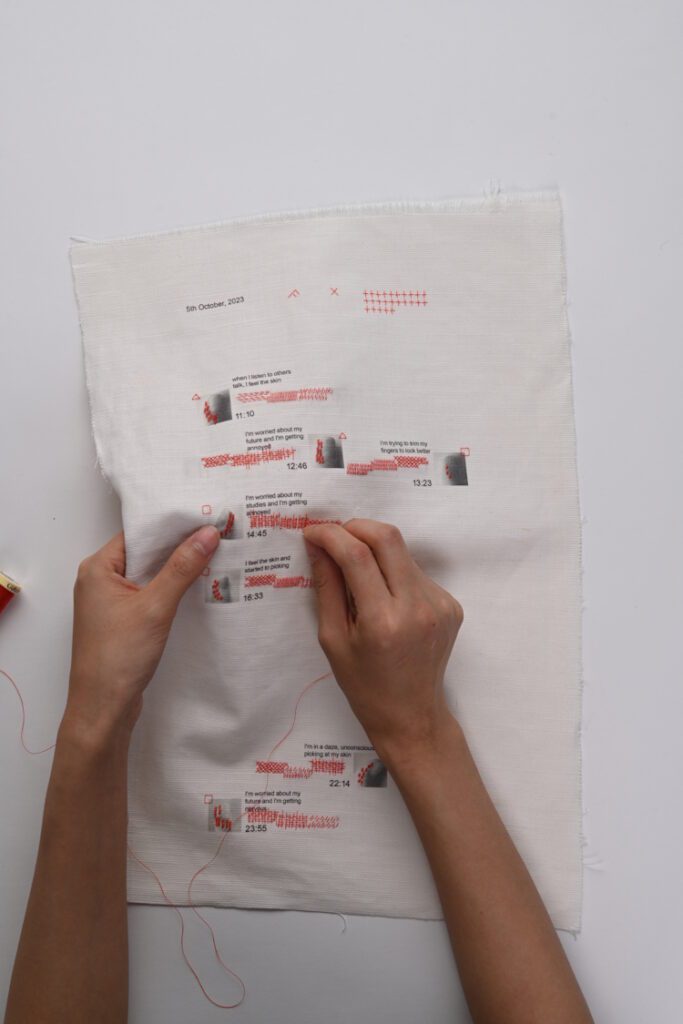
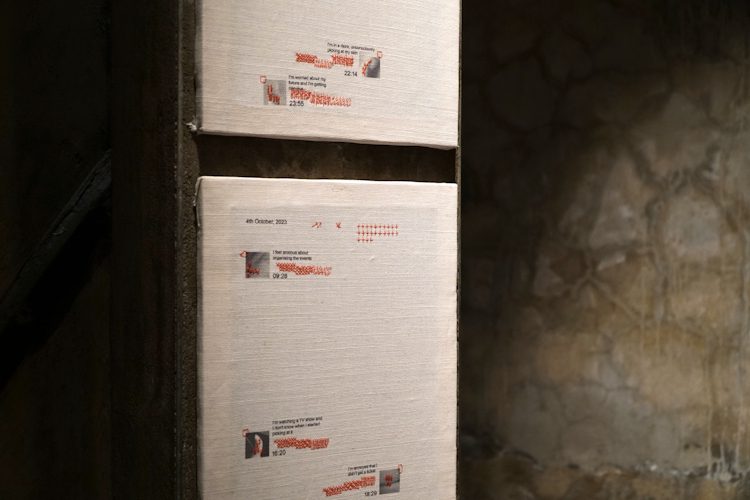
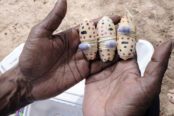
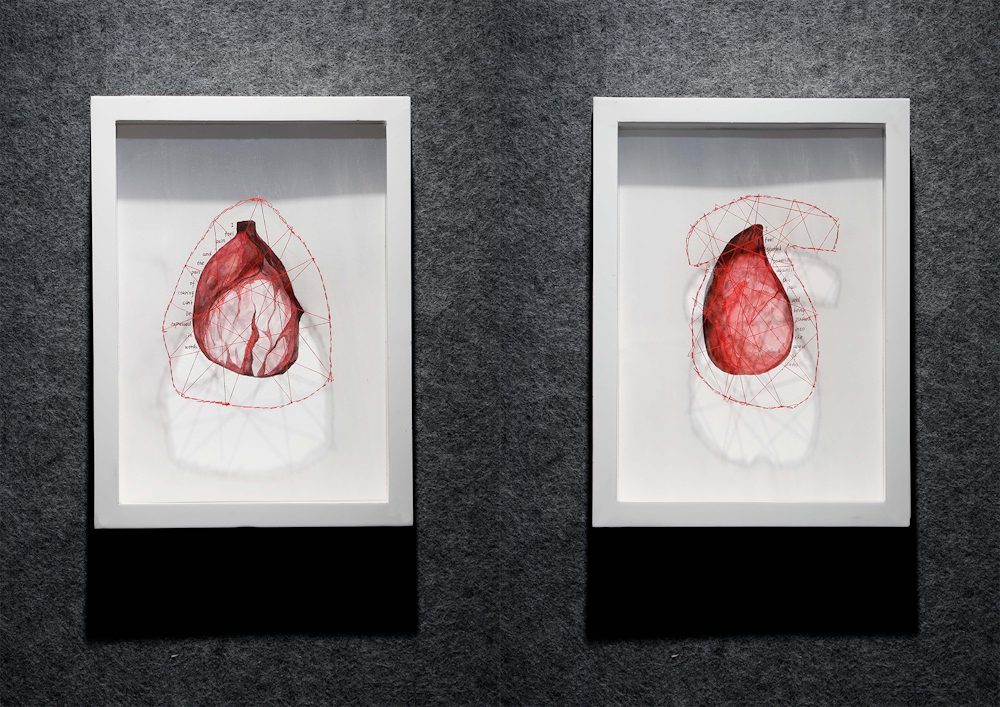
Scars That Speak In Silence (2023), is a hand-stitched fabric piece which explores the connection between marginalised groups in society and the relationship between illness and emotions. She gathered the information using an emotional data language to provide psychological support for Body-Focused Repetitive Behaviours (BFRBs). BFRBs refer to compulsive behaviours such as skin-picking, hair pulling, and other actions that often result in bodily harm (Grant et al., 2016). The results of the research were then transferred onto fabric, creating a tapestry out of the profiles of each person questioned. Each profile illustrates the emotional changes and behaviours of different people with BFRBs across various locations and times of the day. A stitched red line symbolises the lingering scars and physical pain that remain on their bodies. The piece has some echoes of the pharmaceutical and pill pieces made by Damien Hirst (Hirst, 1988-1996).
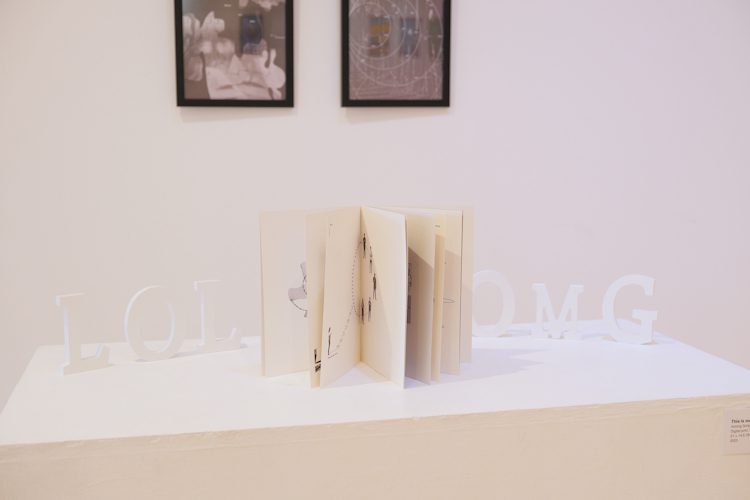
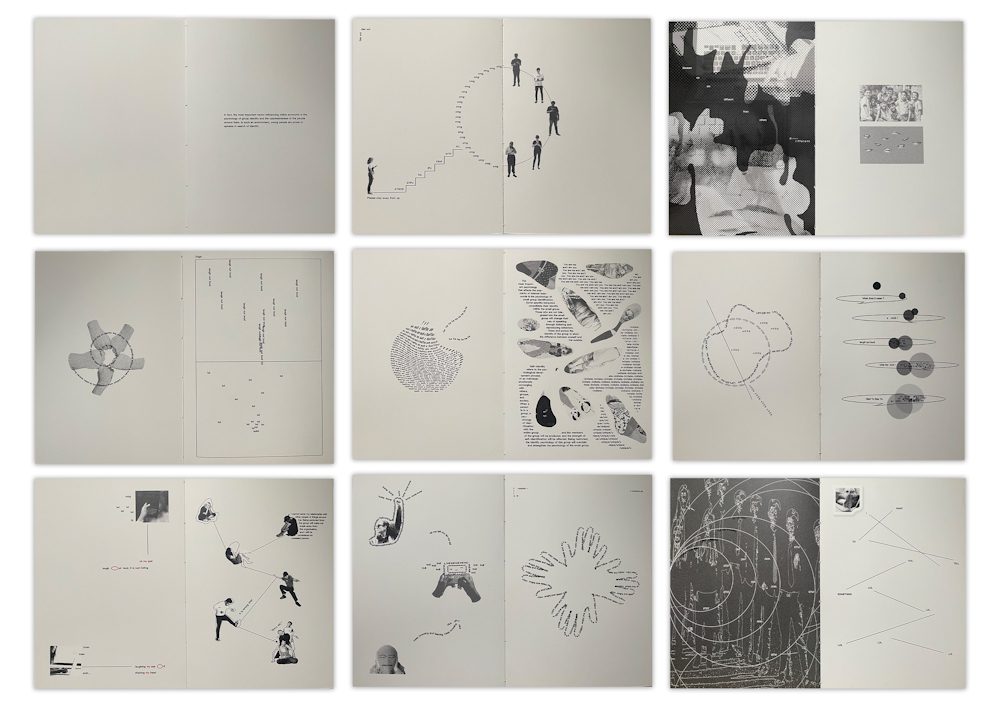
A very interesting piece called, This Is Our Secret Code (2023), is a book that explores the detrimental impact of language degradation and internet acronyms on the communication abilities of adolescents. Inspired by media theorist Roger Fidler, who has addressed the impact of linguistic degradation in his research (Fidler, 1997), Song has created a book which examines the complex issues raised by prolonged use of simplified language, created and discarded in the fast-flow environment of digital communication, and its long term impact on the ability to think and engage critically. Divided into eight sections, the book uses collage, graphics and key-wording techniques, to present her findings in a novel and engaging way. The piece is very reminiscent of the information designer Nicholas Felton, who was an early adopter of the idea of the “quantified self”, and released his Feltron Annual Report for a number of years in infographic books, using similar techniques to Song, that laid out his personal data, from weight to how many miles he had flown to the books he’d read and the photographs he’d taken (Felton, 2005-2014).
“My artistic practice focuses on marginalised and often overlooked bodily and psychological experiences, particularly those related to Body-Focused Repetitive Behaviours (BFRBs), I have developed a data-driven artistic language. In the UK, millions of people are affected by these conditions, yet their experiences are frequently misunderstood, stigmatised, or entirely ignored. My work emerges from my own engagement with these issues, informed by close observation of hidden suffering and a sensitive resonance to psychological and behavioural patterns.
My BFRBs work has been exhibited twice in major group exhibitions in London and have received positive feedback from audiences. As the BFRB community continues to grow, many individuals experience these conditions in secret, often feeling helpless, guilty, or fearful without understanding their struggles. Based on my research, although the NHS in the UK has begun to include BFRB communities in its discussions, and organisations such as BFRB UK & Ireland, OCD-UK, and Trichotillomania Support have established peer support groups and practical interventions, artistic research that engages with the lived realities, bodily experiences, and everyday practices of these communities remains very limited.
Through my work in the UK, I aim to collaborate with artists, researchers, mental health organisations, and BFRB-focused institutions to contribute to public engagement, interdisciplinary research, and exhibitions, fostering deeper conversations around stigma, visibility, care, and hidden disabilities. My artistic research has the potential to support broader efforts in promoting mental health awareness, neurodiversity advocacy, and inclusive cultural production in the UK. Through my practice, I seek to visualise these hidden behavioural patterns and emotional states, allowing audiences to confront psychological experiences that have long been neglected. My work further establishes a dialogue between affect, visuality, and behaviour, positioning art as a bridge between society and mental health discourse.” – Anning Song
The use of data and research in the arts is a growing field and Song finds herself in an area where there are an increasing number of contemporary artists using data visualisation to generate immersive, narrative-driven artworks. The Turkish-American artist, Refik Anadol, for instance, is regarded as a pioneer in the field, and creates mesmerising pieces and dynamic ‘data-paintings’ (Anadol Studio, n.d.), while Nathalie Miebach translates complex weather patterns into sculptures accompanied by music to make data tangible and audible (Miebach, n.d.). Song’s human-centred design practice also finds itself in the company of the technologist and data artist Jonathan Harris, whose empathetic pieces explore the principles and patterns that live at the heart of the human experience (Harris, n.d.).
Artworks based on data research and information seemingly fall into two categories. On the one hand, there are the artists who produce pieces where the gathered data is employed as one might use paint or some other artistic medium to create imagery, crafting painting-like visuals or sculptural pieces which reference the data source but don’t necessarily provide hard source information to the viewer. The work of Refik Anadol, for instance, would fall into this category. On the other hand, are artists working on a smaller scale seeking to engage the viewer with the reality of the material researched in ways that both engage and stimulate their thinking. So far, Song’s practice falls firmly into this category: the data is driving the work. Her background in design communication makes her practice accessible and compelling viewing in design environments, where familiarity with her approaches and the theoretical impulses underpinning them are embraced and understood. Whether it can find a place in more traditional gallery spaces and stand alone in those environments is a challenge that the artist faces, should that be her ultimate goal. The topics and issues she is exploring are important and deserve an audience. In fact, many potential viewers would immediately identify with many of the subjects she addresses. Her challenge will be to find the larger artistic themes which might allow for a broader appreciation for the good work she has begun.
Bibliography
Anadol Studio (n.d.) Refik Anadol Studio. Available at:https://refikanadol.com/ (Accessed: 5 January 2026)
Felton, N. (2005-2014) Feltron Annual Reports. Available at: http://feltron.com/ (Accessed: 5 January 2026).
Fidler, R. (1997) Mediamorphosis: Understanding new media. Thousand Oaks, CA: Pine Forge Press.
Grant, J.E., Odlaug, B.L. and Chamberlain, S.R. (2016) ‘Body-focused repetitive behavior disorders’, in The Oxford Handbook of Impulse Control Disorders. Oxford: Oxford University Press, pp. 324-341.
Harris, J. (n.d.) Jonathan Harris. Available at:http://www.number27.org/ (Accessed: 5 January 2026).
Hirst, D. (1988-1996) Medicine Cabinets series. London: Tate. Available at:https://www.tate.org.uk/art/artists/damien-hirst-2308 (Accessed: 5 January 2026).
IDEO (2015) The field guide to human-centered design. San Francisco: IDEO.org.
London Design Awards (n.d.) Winners Gallery. Available at:https://londondesignawards.com/ (Accessed: 5 January 2026).
Miebach, N. (n.d.) Nathalie Miebach. Available at:http://www.nathaliemiebach.com/ (Accessed: 5 January 2026).
Images courtesy of the artist © Anning Song
This review is part of a supported series on emerging artists including Anning Song
Selected Exhibitions
STUDIOHOMEAWARENESS Art Gallery, Milan, Italy | ‘Soft Archeitectire’ Exhibition | Dec 2025
The Koppel Project, London, UK | ‘Nothing holds on its own’ Exhibition | Oct- Nov 2025
Fitzrovia gallery, London, UK | ‘404 Not Found’ Exhibition | Jun- Jul 2025.
Art’sotel London gallery, London, UK | ‘The green grammer’ Exhibition | June 2025
Espacio Gallery, London, UK | ‘Metamorph’ Exhibition | May 2025
M P Birla Millennium Art Gallery, London, UK | ‘Partly Cloudy’ Exhibition | Apr 2025
Gallery No 600, Shanghai, China | ‘Allow for imperfection’ OCD Science and Art Exhibition | Oct-Dec 2024
Omi Art Gallery, London, UK | ‘Inside Out’ Exhibition | Oct 2024
Tank Shanghai, Shanghai, China | Hovering, Breathing: The Body and Space in East Asian Video Art Exhibition | Mar-June 2024
Fei Gallery, Guangzhou, China | Cold Memory: The Cryogenic Treatment of Readymade Images Exhibition | Feb 2024
Chronus Art Center, Shanghai, China | Spontaneous Rehearsal: An Archive of Youth Art Self-Organizations (2008-2023) Group Exhibition | Nov 2023
OCAT Shenzhen, Shenzhen, China | Sensory Thresholds Sep 2023
One Way Lane Gallery | Beijing, China | Multiple Refractions: A Journey Through Modernist Illusions Exhibition | July – August 2023
London College of Communication, London, UK | ‘UN Women Georgia’ Exhibition | Apr 2023
Selected Awards
London Design Awards | Silver Award- Communication design | London, UK | 2025
Creative Communication Awards | Honorable Mention- Infographic | Los Angeles, USA | 2024
Times Young Creative Awards | Honourable Mention- Design of the Poh Seng Tai Tay | Beijing, China | Apr 2020
Times Young Creative Awards | Honourable Mention- Design of the Yong He Soy Milk King | Beijing, China | Apr 2019
The 11th National Advertising Art Design Competition for college students | Honourable Mention-Design for Jissbon | Beijing, China | Sept 2019
The 10th National Advertising Art Design Competition for college students | Honourable Mention-Design for Veet | Beijing, China | Sept 2018
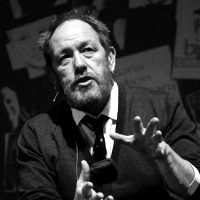
Barry Taylor writes and speaks about the intersections of philosophy, theology and contemporary culture. In past, he was the road manager for AC/DC during the Bon Scott era before becoming a Los Angeles theologian.