Waves and stones, the continuous and the discrete: how do they interact? From the Pre-Socratics and Aristotle through to Bergson, Leibniz, Hegel and Kuhn, and on to Deleuze, Venturi and contemporary physics, Graham Harman’s book follows a long intellectual path to confront this question. It reveals along the way that touch, rather than being something trivial, is philosophically informative.
The central observation of Waves and Stones is that contact is structured by difference. How discrete things meet (and fail to meet) in continua, and how that meeting is philosophically legible and ethically charged, is the book’s focus. Harman coins a thixic vocabulary, notably arriving at the word ‘heterothixis’ to show that “touch can only occur between two things of different kinds” and across a shared medium.
Two distinct presences touching through some shared medium is the territory of Louis MacNeice’s poem ‘Coda’, in particular the lines: “Maybe we shall know each other better / When the tunnels meet beneath the mountain.” The poem gives us, in Harmanian terms, shared media (night, heartbeats, and finally those tunnels representing a future or hoped-for meeting) that allow two otherwise separate interiors to touch.
Harman’s book converts ‘otherness’ into a usable tool; discrete things meet in continua, and continua intersect via discretes. There is fertile ground for case studies of specific works in which heterothixis is applied in detail and for follow-up work that connects the ontology of contact to the politics of noise.
Waves and Stones returns touch to the centre of intellectual life, reminding us how philosophy can make ordinary things feel strange and important, even in the jaded, seen-it-all twenty-first century.
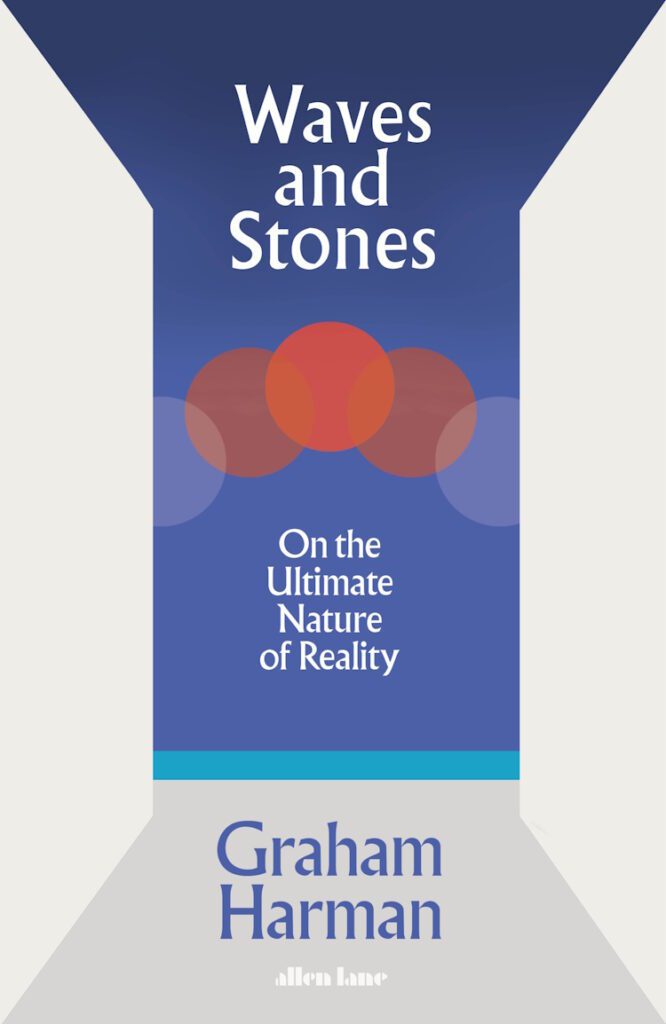
Waves and Stones: On the Ultimate Nature of Reality
Graham Harman
Allen Lane, 2025
Graham Harman Bio:
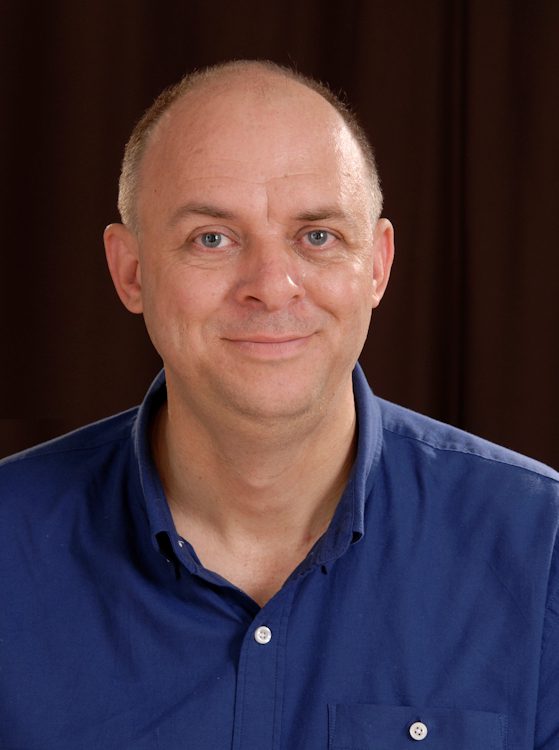
Graham Harman is Distinguished Professor of Philosophy and Liberal Arts Program Coordinator at SCI-Arc. He was born in 1968 in Mt. Vernon, Iowa, and earned his BA from St. John’s College (Maryland), his MA from Penn State University, and his PhD from DePaul University. He is the author of eighteen books, most recently Art and Objects (Polity, September 2019). Graham is the 2009 winner of the AUC Excellence in Research Award. In 2015 he was named by ArtReview as the #75 most powerful influence in the international art world, and in 2016 was named by The Best Schools to their alphabetical list of the 50 most influential living philosophers.
Faculty Profile
Graham Harman Blog
portrait image: Graham Harman photo: © Ismail Baydas
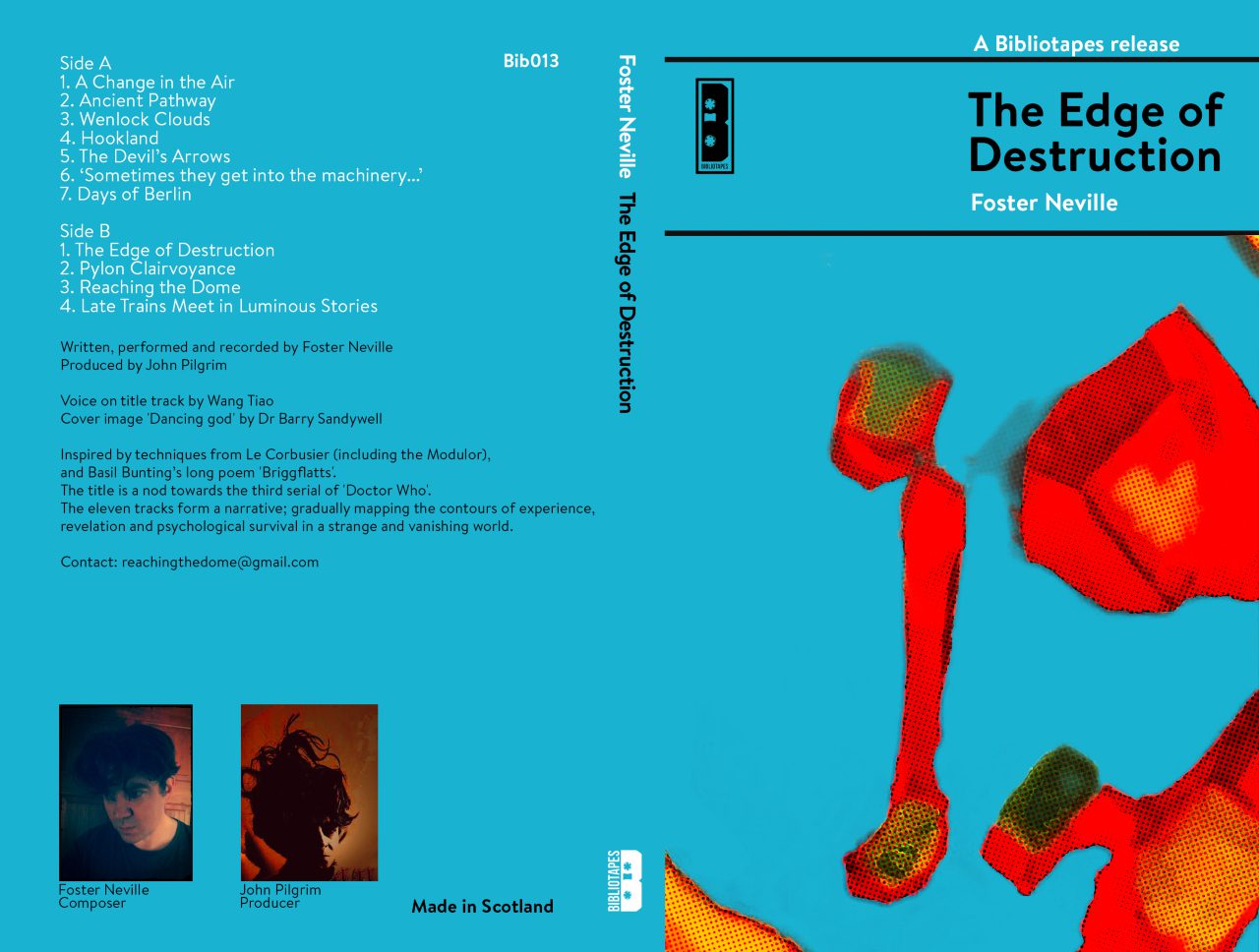
Musician and poet Neville studied under Seamus Heaney and now releases cultish music to international acclaim.